Today's
EarthStation1.com 15% (Or More!) Off Commemorative Memorial Title:
TV Commercials: The Classics Vol. 4 DVD, Video Download, USB Drive
Today, September 9, 2026
September 9: National Wiener Schnitzel
Day: -- Contrary to what most Americans know, Wiener Schnitzel
isn't just a chain restaurant. In fact, a Wiener Schnitzel is a
veal cutlet coated in bread and then pan-fried. This renowned dish
is considered an Austrian delicacy in its beautiful capital,
Vienna. Wiener Schnitzel, (again, the dish, not the restaurant
chain,) is so iconic that there are copycat recipes all over the
world. For example, in America, there's the ever-popular
chicken-fried steak and in Japan, tonkatsu, a breaded and
deep-friend pork cutlet. But you haven't lived until you savor an
authentic dish of Wiener Schnitzel. There are lots of pretenders
to the throne but for the real deal, head to Austria. If you do a
culinary tour of Europe, put this incredible dish - Wiener
Schnitzel - at the top of your bucket list!
https://store.earthstation1.com/tv-commercials-the-classics-vol-4-dv4.html
Today's
EarthStation1.com 15% (Or More!) Off Commemorative Memorial Title:
Jack Benny Complete Radio Broadcasts Set MP3 DVD, Audio Download,
USB
Today, September 9, 2026
September 9: Steak Au Poivre Day: --
"Steak Au Poivre" (STAKE-oo-pwah-vahr) is a French
phrase that means "Steak With Pepper". This
mouth-watering meal consists of filet mignon, a tender and more
expensive cut of tenderloin beef encased in a coating of crushed
peppercorns that adds a lot of texture and flavor. The goal of the
occasion is to pay homage to one of the most delicious and
succulent dishes consumed today. This delectable treat is well
worth an annual celebration. Although Steak Au Poivre was
originally a French dish, it has been adapted to suit several
international cuisines like Italian and Mexican. It is primarily a
filet mignon steak cooked with crushed or coarsely splintered
peppercorns and sometimes served with pan peppercorn sauce. The
origin of Steak Au Poivre goes back to a traditional culinary
style of serving steaks with a sauce. What distinguishes Steak Au
Poivre, however, is the specific preparation and the subtle mix of
flavors. The peppercorn sauce, which is by far the main feature of
the dish, is a cream sauce with peppercorns, also prepared with
butter, garlic, and often a dash of liquor (usually wine or
brandy). The steak is seared on top of a layer of crushed
peppercorns. It is then left to rest for a few minutes for maximum
absorption of the flavorful juices before being served with the
peppercorn sauce. As steaks became available in various regions of
the world, with the invention of refrigeration, cooks could
develop and share their own steak recipes. Steak Au Poivre quickly
became a favorite among French cuisine aficionados. Today, the
dish isn't only a symbol of class and high taste it is also
considered one of the prime steak dishes, which accounts for its
international popularity and adaptation to different styles. A
meal of such high regard is worthy of an annual celebration,
putting it next to some of the most delightful delicacies
available today.
https://store.earthstation1.com/jack-benny-complete-radio-broadcasts-dual-layer-mp3-dv3.html
Today's
EarthStation1.com 15% (Or More!) Off Commemorative Memorial Title:
United Nations Documentaries Set DVD MP4 Download USB Drive
Today, September 9, 2026
September 9: International Day To Protect
Education From Attack: -- A day that aims to protect children and
their education. Did you know that between 2015 and 2019, 93
countries experienced at least one reported attack on education?
Yes, around the world, attacks on children and their education
affect the future of the entire generation of children. The United
Nations' International Day To Protect Education From Attack aims
to raise awareness to preserve education and protect it from
attacks. To observe this day, we are facilitating students in
pursuit of further education through Scholaroo - a platform with
scholarships information from around the world. Attacks on
schools, students, and teachers can have a serious and lasting
impact on a child's access to education and societal development.
In recent years, these unfortunate incidents have increased across
the world especially in the U.S. and in war-prone countries like
Afghanistan, Ethiopia, Chad, Africa's Sahel region, Syria, Yemen,
and many other countries. To counter this and secure the future of
children, the U.N. General Assembly created International Day To
Protect Education From Attack. This day was established in 2020
and is supported by UNESCO and UNICEF, and co-sponsored by 62
countries. This day aims to raise awareness of the plight of
millions of children living in war-affected countries.
International Day To Protect Education From Attack aims to
safeguard and shape the future of more than 75 million children in
the age group of three to 18-year-olds living in 35 countries.
This day sends a clear message regarding the importance of
safeguarding schools and the safety of students, as well as
educators and giving the children constant access to education.
Attacks on education are not just violations of International
Humanitarian Law; these are also potentially ruining the future of
these children. With attacks on education leading to long-term
suspension of learning and teaching, this also increases the risk
of school dropouts. So, let us pledge and commit to promoting and
protecting the right of every child to grow in a safe environment,
have access to quality education, and shape a better future for
them.
https://store.earthstation1.com/united-nations-documentaries-set-dvd-mp4-download-usb-driv4.html
Today's
EarthStation1.com 15% (Or More!) Off Commemorative Memorial Title:
The Indomitable Teddy Roosevelt w/ George C Scott DVD, Download,
USB
Today, September 9, 2026
September 9: National Teddy Bear Day: --
On September 9th, National Teddy Bear Day honors the history of
one of childhood's favorite toys. We have all had a special cuddly
teddy as a child. Some of us still have our teddy bear from our
childhood. No matter what kind of teddy bear you had, the day is a
perfect time to celebrate your childhood friend! In 1902, American
President Theodore Roosevelt refused to shoot a bear cub while
hunting in Mississippi. The incident made national news. Clifford
Berryman published a cartoon of the event in the Washington Post
on November 16th, 1902, and the caricature became an instant
classic. The Berryman cartoon of Teddy Roosevelt and the cub
inspired New York store owner Morris Michtom. He created a new toy
and even had a name in mind. Michtom wrote President Roosevelt to
ask permission to name the new toy a "Teddy Bear."
Australian poet Pam Brown wrote "A teddy bear does not depend
on mechanics to give him the semblance of life. He is loved - and
therefore, he lives." To observe National Teddy Bear Day,
share some of your favorite Teddy Bear characters from a time gone
by. Are they recent interpretations of the lovable creature? Or do
you have an affinity for the classic Teddy Bear? Other ways to
celebrate include: Giving a Teddy Bear to someone you love; Donate
Teddy Bears to a local organization for children; Host a Teddy
Bear tea party with your children; Download, print and color the
Teddy Bear coloring page; and Share your memories of Teddy Bears
using #NationalTeddyBearDay to post on social media.
https://store.earthstation1.com/the-indomitable-teddy-roosevelt-george-c-scott-john-philip-sousa-dvd.html
Today's
EarthStation1.com 15% (Or More!) Off Commemorative Memorial Title:
Remember When: It'll Never Fly w/ Dick Cavett Inventions DVD, MP4,
USB
Today, September 9, 2026
September 9: National When Pigs Fly Day:
-- This day reminds us that sometimes even seemingly impossible
things can happen. People need to ignore their doubts and stand up
for their beliefs. So, what exactly is National When Pigs Fly Day?
Some people say it's a day of hope, and others say it's a day of
miracles. It is when something that was considered to be
impossible happens, according to the people who celebrate it. It
is a special occasion in which seemingly incomprehensible things
do come true. But if you're like many other people, you're looking
for answers for this exciting occasion. It's funny how there are
many things on this Earth that we can't explain. National When
Pigs Fly Day is a day for dreaming big and thinking about
possibilities. It's a day to imagine a future that may seem
impossible or absurd and take small steps towards making it
happen. It's a day to think outside the box, take risks, and make
things happen. The idea behind National When Pigs Fly Day is to
make people set their sights higher and never give up. The
holiday's unusual name comes from a common expression, "when
pigs fly," which is used when someone wants you to think
something will never happen. It can be used in jest or
sarcastically, but it can also have negative connotations
depending on who utters it and how they use it. In other words,
they are saying that something is impossible, but then add that it
will never happen anyway. The first time this day was celebrated
was on September 9, 2020. It was founded by Lisa J. Schanley, who
submitted it for consideration as a new holiday.
https://store.earthstation1.com/remember-when-it39ll-never-fly-dvd-technology-history-dick-cave39.html
Today's
EarthStation1.com 15% (Or More!) Off Commemorative Memorial Title:
The Un-Americans: The Second Red Scare DVD, MP4 Download, USB
Stick
Today, September 9, 2026
September 9: Falsely Accused Day: --
Advocating for justice, supporting individuals caught in legal
webs, and striving to rectify wrongful accusations with diligence.
When a person is accused of a crime, the situation surrounding the
accusation is almost always complicated and complex. The idea that
a person is presumed innocent until proven guilty may still be
written into many laws, but the public has a tendency to try and
"convict" accused individuals even without having all of
the facts. And although the justice systems of each nation are
hopefully set up to prevent this type of activity, false
accusations can be devastating on a person's life, health,
well-being and freedom. Domestic violence, sexual assault, child
abuse and other forms of abuse represent millions of accusations
against people who have been later proven not guilty. And each
time a false accusation is made, it takes resources away from
being able to convict those who truly have committed crimes.
National Falsely Accused Day is here to bring awareness to the
many different failings of the justice systems that allows many
innocent people to be accused of - and often convicted for -
crimes they did not commit. National Falsely Accused Day was
initially founded in 2020 by Lyn Crabtree, after she became
falsely accused along with her husband. Since then, a grassroots
movement of folks called Fighting for the Falsely Accused, working
in collaboration with Lyn, spread awareness of the day throughout
the United Kingdom; first in Liverpool, Manchester and London and
then - with the introduction of International Falsely Accused Day
- spreading out into Europe and all over the globe. The purpose
behind the day is to raise awareness for those people,
particularly men, who have been accused of a crime they did not
commit. This day is scheduled to be celebrated each year on the
anniversary of the birth of former school teacher and BBC radio
broadcaster, Simon Warr. From 2012-2014, Warr was falsely accused
of historical childhood abuse related to his years teaching and
eventually, through an arduous trial, was found not guilty of this
crime. Warr eventually wrote a book on his ordeal and spoke up
about ways historical childhood abuse should be handled. Each year
on this day, National Falsely Accused Day acts as a time for
people who have been falsely accused, along with their friends and
family, to organize peaceful protests regarding the problem of
false accusations and wrongful convictions. Public gatherings and
protests, often along with speeches, are held in various cities
around the UK and other countries such as Ireland, Australia,
Argentina, Poland and the United States.
https://store.earthstation1.com/the-unamericans-the-second-red-scare-dvd-mp4-us4.html
Today's
EarthStation1.com 15% (Or More!) Off Commemorative Memorial Title:
Automobile Accident & Drivers Education Films DVD, Download,
USB Drive
Today, September 9, 2026
September 9: Emergency Services Day
(United Kingdom): -- A national day is observed across the U.K.
and helps to support the brave men and women of the N.H.S. and
emergency services. The holiday is also referred to as 999 Day.
The King and the Queen; HRH the Prince of Wales; the Prime
Minister; and the First Ministers of Northern Ireland, Scotland,
and Wales have given their support to the holiday. The holiday
helps to promote the usage of the emergency services in a
responsible manner. It helps to educate the public about basic
lifesaving skills. It also promotes the many exciting career and
volunteering opportunities that may be available for people to
apply for. Emergency Services Day was founded in 2016 by Tom
Scholes-Fogg who wanted to set aside a special day to honor the
country's 999 servicemen and women. It was declared an official
day by former U.K. Prime Minister, Theresa May, in September 2017.
The inauguration of the day took place at Heaton Park in
Manchester, England. It is usually held at a different venue each
year. The day is also called 999 Day and people use the
opportunity to thank emergency personnel for their service.
Emergency personnel includes anyone else who works to keep the
public safe such as fire crews, doctors, paramedics, pilots, and
even service animals. Special educational events are held
throughout the holiday to teach the public about life-saving
skills. The more people with basic first-aid and emergency
training, the safer society is in general. People would be able to
help others in some way when there is an emergency. People are
able to speak with emergency service workers and get a better idea
of what the jobs truly entail. This is an opportunity for more
young people to be inspired into taking up careers that are
focused on helping others. During the festivities of the holiday,
a thanksgiving service is held to honor the brave people who have
been lost in the line of duty. Volunteers are a big part of the
emergency services so awareness and appreciation for the force
help a lot. It helps to inspire more people to volunteer and
recognizes those who are already volunteering. Some volunteer
roles include; Search and Rescue, Special Constables, Retained
Firefighters, N.H.S. Community Responders, and Coastguard
volunteers.
https://store.earthstation1.com/automobile-accident-and-drivers-ed-films-3-dual-layer-dvd-se3.html
Today's
EarthStation1.com 15% (Or More!) Off Commemorative Memorial Title:
Andy Warhol (1987) Documentary Mel Melvyn Bragg MP4 Video Download
DVD
Today, September 9, 2026
September 9: Wonderful Weirdos Day: -- There's nothing as unexciting as being predictable and boring. But thankfully for all of us, we all have some weird traits or characteristics. This weirdness is exactly what makes us unique! Don't be shy to explore your weirdness on Wonderful Weirdos Day. Be creative and own it. You will be surprised to find how life-changing self-acceptance can be. Happy Wonderful Weirdos Day to all the wonderful weirdos who make our lives all the more interesting. What are the weirdest ways you can think of to celebrate the day? It's no surprise that we celebrate our weirdness since weirdos have existed for as long as humans have been around. We only have to be a little bit different than everyone else, and just like that, congratulations, you are a weirdo! But weirdos have not always been thought of as wonderful or even accepted by society. Think of the Salem witch trials. An event that only lasted a year is still spoken about to this day. During these trials, people who were suspected of witchcraft were accused of guilty and many of them were executed. Even the slightest unusual behavior becomes heavily scrutinized, the result of which is often fatal! Throughout history, society has not necessarily been kind to those who have deviated from acceptable behavior. It wasn't until the year 2000, when a few residents of Austin, Texas, decided that there should be a day for the celebration of our collective weirdness. The day was initially known as Keep Austin Weird, but the name was changed eventually. The day was sponsored by Tom Roy, but today many people celebrate it on their own. Wonderful Weirdos Day is not an official celebration nor is it a holiday, but people celebrate the day with much enthusiasm anyway, because it's a day we all feel accepted and understood just the way we are! Wonderful Weirdos Day is also the day to pause and ask yourself if someone is truly weird or if they are just a little different from you! https://store.earthstation1.com/anwa1domelme.html
Today's
EarthStation1.com 15% (Or More!) Off Commemorative Memorial Title:
The American Adventure: TV History Series 1607-1876 DVD MP4 USB
Drive
Today, September 9, 2026
September 9, 1776: The Age Of
Enlightenment (The Enlightenment, The Age Of Reason): The Age Of
Revolution: The Atlantic Revolutions: The American Enlightenment:
The American Revolution: The Continental Congress: The Second
Continental Congress: "The United States Of America": --
The Continental Congress formally declares the name of the new
nation to be "The United States Of America"; this
replaced the term "United Colonies," which had been in
general use. In the Congressional declaration, the delegates
wrote, "That in all continental commissions, and other
instruments, where, heretofore, the words 'United Colonies' have
been used, the stile be altered for the future to the "United
States."
https://store.earthstation1.com/the-american-adventure-series-us-1st-century-4-dv14.html
Today's
EarthStation1.com 15% (Or More!) Off Commemorative Memorial Title:
Tolstoy from Riches to Rags: Leo Tolstoy Biography DVD, MP4, USB
Drive
Today, September 9, 2026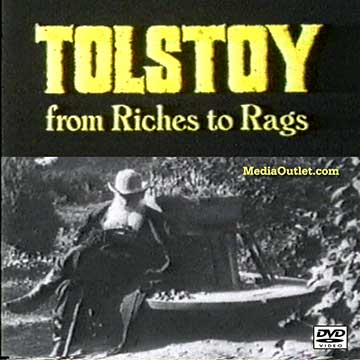
September 9, 1828: #BOTD: #HBD! Leo
Tolstoy, Russian author, playwright, philosopher and mystic, best
known for the novels War And Peace (1869) and Anna Karenina
(1877), often cited as pinnacles of realist fiction, regarded as
one of the greatest authors of all time (d. November 20, 1910) is
#born Lev Nikolayevich Tolstoy in Yasnaya Polyana, Krapivensky
Uyezd, Tula Governorate, Russian Empire to the well-known
aristocratic Tolstoy family of The House Of Tolstoy, or House Of
Tolstoi, of the old Russian nobility, descendants of Andrey
Kharitonovich Tolstoy ("the Fat"; the name Tolstoy is
derived from the Russian adjective "tolstyy", meaning
"thick, stout, fat"), who moved from Chernigov to Moscow
and served under Vasily II of Moscow in the 15th century. The
"wild Tolstoys", as they were known in the high society
of Imperial Russia, have left a lasting legacy in Russian
politics, military history, literature, and fine arts. Count Lev
Nikolayevich Tolstoy first achieved literary acclaim in his
twenties with his semi-autobiographical trilogy, Childhood,
Boyhood, and Youth (1852-1856), and Sevastopol Sketches (1855),
based upon his experiences in the Crimean War. Tolstoy's fiction
includes dozens of short stories and several novellas such as The
Death of Ivan Ilyich, Family Happiness, and Hadji Murad. He also
wrote plays and numerous philosophical essays. In the 1870s
Tolstoy experienced a profound moral crisis, followed by what he
regarded as an equally profound spiritual awakening, as outlined
in his non-fiction work A Confession. His literal interpretation
of the ethical teachings of Jesus, centering on the Sermon on the
Mount, caused him to become a fervent Christian anarchist and
pacifist. Tolstoy's ideas on nonviolent resistance, expressed in
such works as The Kingdom of God Is Within You, were to have a
profound impact on such pivotal 20th-century figures as Mohandas
Gandhi, and Martin Luther King, Jr.. Tolstoy also became a
dedicated advocate of Georgism, the economic philosophy of Henry
George, which he incorporated into his writing, particularly
Resurrection. Leo Tolstoy died of pneumonia at Astapovo railway
station, Ryazan Governorate, Russian Empire, aged 82, after a
day's train journey south; renouncing his aristocratic lifestyle,
he secretly left home one winter night in an attempt to escape
from his wife's tirades; she had spoken out against many of his
teachings, and in recent years had grown envious of his attention
to Tolstoyan "disciples". Tolstoy spent the last hours
of his life preaching love, non-violence, and Georgism to fellow
passengers on the train. The station master took Tolstoy to his
apartment, and his personal doctors arrived and gave him
injections of morphine and camphor. The police tried to limit
access to his funeral procession, but thousands of peasants lined
the streets. His buried at The Tolstoy Home in Yasnaya Polyana,
Tula Oblast, Russia.
https://store.earthstation1.com/tolstoy-from-riches-to-rags-dvd.html
Today's
EarthStation1.com 15% (Or More!) Off Commemorative Memorial Title:
Portraits Of American Presidents Nos. 1-42 TV Series MP4 Download
DVD
Today, September 9, 2026
September 9, 1879: The United States: The
History Of The United States: The United Kingdom: The United
Kingdom: The History Of The United Kingdom: The Resolute Desk (The
Hayes Desk): -- The Resolute Desk, a nineteenth-century partners
desk used by several presidents of the United States in the White
House as the Oval Office desk, is created by order of Queen
Victoria as a gift to President Rutherford B. Hayes in 1880, and
is built from the oak timbers of the British Arctic exploration
ship HMS Resolute. In the Spring of 1854, while searching for Sir
John Franklin and Franklin's Lost Expedition, Resolute had become
trapped in an ice floe in Tariyunnuaq, an Arctic waterway in the
Kitikmeot Region of Nunavut, Canada, and abandoned with great
reluctance. A year and a half later, on September 10, 1855, whe
was discovered adrift in Davis Strait, a northern arm of the
Atlantic Ocean between Greenland Baffin Island, by the American
whaler ship George Henry. She was repaired and returned to the
United Kingdom as a gift to Queen Victoria in 1856, a gesture of
goodwill from the United States. The ship was decommissioned in
1879, broken up, and a competition was held to design and build a
piece of furniture from its timbers that Queen Victoria could give
to the American president. Morant, Boyd, & Blanford won this
contest, and this desk was constructed shortly after. The British
government ordered at least three desks to be made from the
timbers of the ship, and they were constructed by cabinet makers
at the Joiner's Shop of Chatham Dockyard in Kent. The largest of
these three desks were the 1,300-pound Resolute Desk, created by
William Evenden, a skilled joiner at Chatham Dockyard, probably
from a design by Morant, Boyd, & Blanford., and presented to
U.S. President Rutherford B. Hayes in 1880 as a gesture of thanks
for the rescue and return of Resolute. The second desk, called the
Grinnell Desk or the Queen Victoria Desk, was a smaller lady's
desk presented to the widow of American merchant and
philanthropist Henry Grinnell in 1880 in recognition of her
husband's generous contributions to the search for British Royal
Navy officer and Arctic explorer Rear-Admiral Sir John Franklin.
The third desk, or more accurately a writing table, was
commissioned by Queen Victoria for her steam-powered yacht HMY
Victoria and Albert; it remains part of the Royal Collection of
the British royal family, the largest private art collection in
the world. The Resolute desk was received at the White House on
November 23, 1880, and shortly thereafter was moved to the second
floor. It stayed in the President's Office and President's Study
until the White House Reconstruction from 1948 to 1952. After the
reconstruction, it was placed in the Broadcast Room where Dwight
D. Eisenhower used it during both radio and television broadcasts.
Jackie Kennedy rediscovered the desk and had it brought to the
Oval Office in 1961. The desk was removed from the White House
after the assassination of President John F. Kennedy, and went on
a traveling exhibition with artifacts of the Kennedy Presidential
Library. It was then put on display in the Smithsonian
Institution. President Jimmy Carter brought the desk back to the
Oval Office in 1977, where it has remained since, save that George
H. W. Bush used the C & O desk (one of four desks built for
the owners of the Chesapeake and Ohio Railway (C & O), this
one donated to the White House by Chesapeake and Ohio's successor,
CSX Transportation) in the Oval Office but kept the Resolute desk
in the White House. The desk has been modified twice. Franklin
Roosevelt requested the addition of a door with the presidential
seal to conceal his leg braces and a safe, but it was not
installed until 1945, after his death. A 2-inch-tall (5.1 cm)
plinth was added to the desk in 1961 and replaced in 1986. Many
replicas have been made of the Resolute desk. The first was
commissioned in 1978 for a permanent display at the John F.
Kennedy Presidential Library in Boston, Massachusetts, and since
then five other presidential libraries and many museums,
libraries, tourist attractions, and private homes and offices have
acquired copies of the desk.
https://store.earthstation1.com/portraits-of-american-presidents-nos-142-tv-series-mp4-download1424.html
Today's
EarthStation1.com 15% (Or More!) Off Commemorative Memorial Title:
The Parade: North Korea Celebrates 40th Anniversary DVD, Download,
USB
Today, September 9, 2026
September 9, 1948: Korea: The History Of
Korea: The Aftermath Of World War II: The Cold War: The Cold War
In Asia: The Korean Conflict: The Division Of Korea: The Founding
Of The Democratic People's Republic Of Korea (The DPRK, DPR Korea,
Korea DPR): The Day Of The Foundation Of The Republic: --
Following the withdrawal of Soviet forces from North Korea, Kim
Il-Sung declares the establishment of the Democratic People's
Republic Of Korea (abbreviated as DPRK, PRK, DPR Korea, or Korea
DPR), with Pyongyang, its largest city, as its capital. It is a
country in East Asia constituting the northern part of the Korean
Peninsula. To the north and northwest, the country is bordered by
China and by Russia along the Amnok (known as the Yalu in Chinese)
and Tumen rivers; it is bordered to the south by South Korea, with
the heavily fortified Korean Demilitarized Zone (DMZ) separating
the two. Nevertheless, North Korea, like its southern counterpart,
claims to be the legitimate government of the entire peninsula and
adjacent islands. Both North Korea and South Korea became members
of the United Nations in 1991. In 1910, Korea was annexed by
Imperial Japan. After the Japanese surrender at the end of World
War II in 1945, Korea was divided into two zones, with the north
occupied by the Soviet Union and the south occupied by the United
States. Negotiations on reunification failed, and in 1948,
separate governments were formed: the socialist Democratic
People's Republic Of Korea in the north, and the capitalist
Republic of Korea in the south. An invasion initiated by North
Korea following a series of South Korean provocations led to the
Korean War (1950-1953). The Korean Armistice Agreement brought
about a ceasefire, but no peace treaty was signed. North Korea
officially describes itself as a self-reliant socialist state, and
formally holds elections.] Various media outlets have called it
Stalinist, particularly noting the elaborate cult of personality
around Kim Il-Sung and his family. The Workers' Party of Korea
(WPK), led by a member of the ruling family, holds power in the
state and leads the Democratic Front for the Reunification of the
Fatherland of which all political officers are required to be
members. Juche, an ideology of national self-reliance, was
introduced into the constitution in 1972. The means of production
are owned by the state through state-run enterprises and
collectivized farms. Most services such as healthcare, education,
housing and food production are subsidized or state-funded. From
1994 to 1998, North Korea suffered a famine that resulted in the
deaths of between 240,000 and 420,000 people, and the population
continues to suffer malnutrition. North Korea follows Songun, or
"military-first" policy. It is the country with the
highest number of military and paramilitary personnel, with a
total of 9,495,000 active, reserve and paramilitary personnel. Its
active duty army of 1.21 million is the fourth largest in the
world, after China, the United States and India. It possesses
nuclear weapons. International organizations have assessed that
human rights violations in North Korea are commonplace and are so
severe as to have no parallel in the contemporary world. The North
Korean government strongly denies most allegations, accusing
international organizations of fabricating human rights abuses as
part of a smear campaign with the covert intention of regime
change, although they admit that there are human rights issues
relating to living conditions which the government is attempting
to correct.
https://store.earthstation1.com/the-parade-dvd-north-korea-rallies-during-1988-seoul-olym1988.html
Today's
EarthStation1.com 15% (Or More!) Off Commemorative Memorial Title:
Elvis Presley Documentaries Set MP4 Video Download DVD
Today, September 9, 2026
September 9, 1956: Aesthetics: Performing
Arts: Premieres: Television Premieres: United States Television
Premieres: Music Television: Elvis Presley: -- Elvis Presley
appears on the Ed Sullivan Show for the first time. Ed Sullivan,
whose variety show was the nation's most popular, declared him
"unfit for family viewing" after seeing Elvis' second
performance on The Milton Berle Show. When Presley next appeared
on television on The Steve Allen Show, Allen's show with Presley
had, for the first time, beaten CBS's Ed Sullivan Show in the
ratings. Sullivan, despite his June pronouncement, booked Presley
for three appearances for an unprecedented 50K USD. The first, on
September 9, 1956, was seen by approximately 60 million viewers-a
record 82.6 percent of the television audience. Actor Charles
Laughton hosted the show, filling in while Sullivan was recovering
from a car accident. More than any other single event, it was this
first appearance on The Ed Sullivan Show that made Presley a
national celebrity of barely precedented proportions.
https://store.earthstation1.com/viva-elvis-dvd-elvis-presley-cult-documentary.html
Today's
EarthStation1.com 15% (Or More!) Off Commemorative Memorial Title:
Black Stars In Orbit: The Black Astronauts Of NASA MP4 Download Or
DVD
Today, September 9, 2026
September 9, 1933: #BOTD: #HBD! Ed
Dwight, American sculptor, author, retired test pilot, and
astronaut who in 1961 at the direction and insistence of President
John F. Kennedy became the first African American to enter the Air
Force training program from which NASA selected astronauts, and
who on the Monday after Kennedy's Friday morning assassination was
de-selected for the Astronaut Corps due to open prejudice, despite
successfully completing the training at the Aerospace Research
Pilot School and advancing to the second round of the program in
1963, the oldest man to have flown into space as of the 2024 Blue
Origin NS-25 mission (a record previously held by William Shatner)
is #born Edward Joseph Dwight Jr. in the racially segregated
Kansas City, Kansas area, to Georgia Baker Dwight (1909-2006) and
Edward Joseph Dwight Sr. (1905-1975), who played second base and
centerfield for the Kansas City Monarchs and other Negro league
teams from 1924 to 1937. Enlisting in the U.S. Air Force in 1953,
he earned a commission as a lieutenant in 1955. In 2020, he became
an honorary member of the U.S. Space Force during a ceremony at
the Pentagon. An accomplished sculptor, Dwight has completed a
number of public monuments, including the Texas African American
History Memorial on the grounds of the Texas State Capitol, and
the African American History Monument on the grounds of the South
Carolina State House.
https://store.earthstation1.com/black-stars-in-orbit-the-black-astronauts-of-nasa-mp4-download-or-dvd.html
Today's
EarthStation1.com 15% (Or More!) Off Commemorative Memorial Title:
Eyes On The Prize II: America At The Racial Crossroads DVD MP4 USB
Today, September 9, 2026
September 9, 1971: Crime: Crime In The
United States: Prisons: Prisons In The United States: African
American Civil Rights: The History Of African American Civil
Rights: Latin American Civil Rights: The History Of Latin American
Civil Rights: Prisoners' Rights: The Prisoner's Rights Movement:
Prison Uprisings (Prison Riots): Prison Uprisings In The United
States (Prison Riots In The United States): Prison Massacres:
Prison Massacres In The United States: The Attica Prison Riot (The
Attica Prison Rebellion, The Attica Uprising, The Attica Prison
Massacre): -- The four-day Attica Prison Uprising begins at The
Attica Correctional Facility in Attica, New York, eventually
resulting in at least 43 people were dead, including ten
correctional officers and civilian employees, and 33 inmates, most
killed by state troopers retaking the prison. Based upon
prisoners' demands to better their deplorable living conditions
and to safeguard against the ongoing abuse of their political
rights, the riot was one of the most well-known and significant
uprisings of the Prisoners' Rights Movement. On September 9, 1971,
two weeks after the killing of George Jackson at San Quentin State
Prison, about 1,000 of the Attica prison's approximately 2,200
inmates rioted and took control of the prison, taking 42 staff
hostage. During the following four days of negotiations,
authorities agreed to 28 of the prisoners' demands, but would not
agree to demands for complete amnesty from criminal prosecution
for the prison takeover or for the removal of Attica's
superintendent. By the order of Governor Nelson Rockefeller, who
refused to visit the prisoners during the rebellion, stating that
the prisoners "carried out the cold-blood killings they had
threatened from the outset," despite only one of the deaths
being attributed to the prisoners, state police took back control
of the prison. New York Times writer Fred Ferretti said the
rebellion concluded in "mass deaths that four days of taut
negotiations had sought to avert". The uprising occurred
within the context of anti-colonial movements throughout the
Third-World, the Black Power Movement and New Left movements
within the United States, and intensifying state repression of
these movements, including via The War On Crime and the FBI's
Counter Intelligence Program (COINTELPRO). Some of the prisoners
in Attica participated in the riot because they desired better
living conditions. Historian and left-wing activist Howard Zinn
wrote the following about the conditions in Attica prior to the
uprising "Prisoners spent 14 to 16 hours a day in their
cells, their mail was read, their reading material restricted,
their visits from families conducted through a mesh screen, their
medical care disgraceful, their parole system inequitable, racism
everywhere." Overcrowding contributed to the poor conditions,
as in recent years the prison's population had increased from the
1,200 prisoners for which it was designed to 2,243. Additionally,
as in many American prisons, racial disparities also existed at
Attica. Within the prison population, 54% of the incarcerated men
were African American, 9% of them were Puerto Rican, and 37% of
them were white. All of the guards (or all but one of the guards
depending on the source) were white. Guards often threw out
letters written in Spanish sent to or from Puerto Rican prisoners,
and relegated black prisoners to the lowest-paid jobs and
subjected them to regular racial harassment. There were also
geographic disparities - most of the incarcerated men were from
urban areas, including metropolitan New York, while most of the
guards were from the local region. On the other hand,
anthropologist Orisanmi Burton has shown that while improving
prison conditions and racial disparities were an important
concern, many Attica prisoners were critical of prison reform and
participated in the uprising because they understood prisons like
Attica as sites of revolutionary warfare.[9] Burton therefore
argues that the Attica rebellion was informed by the politics of
prison abolition. For example, in 1972 Attica prisoner Joseph
Little told a government panel, "I'm not for no penitentiary
reform. I'm for abolishing the whole concept of penitentiary
reform." During this period, there was a growing culture of
activism in which prisoners not only demanded better treatment,
but sought to participate in broader movements for radical social
transformation within and beyond the United States. Be this as it
may, the previous year, multiple rebellions occurred throughout
the New York City Jail system, including the Manhattan House of
Detention, the Brooklyn House of Detention, The Queens Branch
House of Detention at Kew Gardens, the Queens Branch House of
Detention at Long Island City, and the Adolescent Remand Shelter
on Rikers Island. Inmates at the Manhattan House of Detention held
five guards hostage for eight hours, until state officials
promised to hear prisoner grievances and they also promised not to
take any punitive action against the rioters.] Despite that
promise, officials had the primary ringleaders shipped to various
New York State Prisons and many were brutalized, held for months
in solitary confinement and faced further criminal charges.
Incarcerated people and state authorities in Auburn Correctional
Facility engaged in an ongoing conflict and confrontation between
November 2, 1970 and June 9, 1971. Several participants in what
came to be known as the Auburn prison riot were subsequently
transferred to other New York State prisons, including Attica. In
July 1971, a group of Attica inmates presented a list of 27
demands regarding improvements in living conditions in Attica to
state Commissioner of Corrections Russell Oswald and Governor
Nelson Rockefeller. These demands included improvements in
multiple areas such as diet, the quality of guards, rehabilitation
programs, and, in particular, education programs. The inmates also
demanded increased religious freedom, the ability to engage in
political activity, and an end to censorship, which they argued
were all vital to a proper education within the prison. The
commissioner did not take any actions on the list of demands.
Attica warden Vincent Mancusi responded by adding additional
restrictions to inmates' reading materials and personal
belongings. In August 1971, George Jackson, an author and
prominent member of the Black Panther Party, was shot and killed
during an escape attempt in which three prison guards and two
white inmates were murdered at San Quentin State Prison in
California. Through his writings, Jackson had encouraged
imprisoned people throughout the United States to become
politically active. As a result, Jackson became one of the first
targets of the FBI's Black Extremist Activities in Penal
institutions program, which later evolved into the Prison
Activists Surveillance Program (PRISACTS). Many incarcerated
people in Attica had read Jackson's books and cited Jackson's
death as a major catalyst for the riot. The day after Jackson's
death, at least 700 Attica inmates participated in a hunger strike
in his honor.
https://store.earthstation1.com/eyes-on-the-prize-ii-dvd-set-4-discs-complete-2nd-seri42.html
Today's
EarthStation1.com 15% (Or More!) Off Commemorative Memorial Title:
The Secret Life Of The Video Recorder (VCR, VTR) DVD, MP4, USB
Drive
Today, September 9, 2026
September 9, 1976: Video: The History Of
Video: VHS (Video Home System): -- VHS, the standard for
consumer-level analog video recording on tape cassettes developed
by Victor Company of Japan (JVC) in the early 1970s, makes its
world premiere when it is released in Japan by the president of
JVC in the form of the worlds's first VHS VCR, the Victor HR-3300;
it would be released in the United States on August 23, 1977. JVC
started selling the HR-3300 in Akihabara, Tokyo, Japan on October
31, 1976.Region-specific versions of the JVC HR-3300 were also
distributed later on, such as the HR-3300U in the United States,
and HR-3300EK in the United Kingdom in January 1977. The United
States received its first VHS-based VCR - the RCA VBT200 on August
23, 1977. The RCA unit was designed by Matsushita, and was the
first VHS-based VCR manufactured by a company other than JVC. It
was also capable of recording four hours in LP (long play) mode.
The United Kingdom later received its first VHS-based VCR - the
Victor HR-3300EK in 1978. Quasar and General Electric would
follow-up with VHS-based VCRs - all designed by Matsushita. By
1999, Matsushita alone produced just over half of all Japanese
VCRs. TV VCR combos, combining a standard definition CRT TV with a
VHS mechanism under the CRT, were also once available for
purchase. The VCR is an electro-mechanical device that records
analog audio and analog video from television on a removable,
magnetic tape videocassette. Images and sound can then be played
back at a more convenient time. Dr. Norikazu Sawakzaki developed a
prototype helical scan videotape recorder (VTR) in 1953. In 1956,
Ampex introduced the quadruplex videotape professional broadcast
standard format with its Ampex VRX-1000; due to its high 50K USD
price, the Ampex VRX-1000 could be afforded only by the television
networks and the largest individual stations. Many different video
recording systems were developed for home, business and broadcast
use during the 1960s. It was not until 1970 that the Philips
"Video Cassette Recording" (VCR) format was developed as
the Philips N1500, the first home video cassette format player as
well as the first home video cassette format recorder. The home
video cassette market grew slowly but surely as prices dropped and
quality improved throughout the 1970s, '80s, and '90s. At the
time, the VCR was the primary way to watch movies at home.
Millions of people created their own personal movie library. Over
10 billion videotapes remain today. From the 1950s, magnetic tape
video recording became a major contributor to the television
industry, via the first commercialized video tape recorders
(VTRs). At that time, the expensive devices were used only in
professional environments such as television studios and medical
imaging (fluoroscopy). In the 1970s, videotape entered home use,
creating the home video industry and changing the economics of the
motion picture and television businesses. The television industry
viewed videocassette recorders (VCRs) as having the power to
disrupt their business, while television users viewed the VCR as a
means to take control of their viewing experiences. In the 1970s
and early 1980s, there was a format war in the home video
industry. Two of the standards, VHS and Betamax, received the most
media exposure. VHS eventually won the war, dominating 60 percent
of the North American market by 1980 and emerging as the dominant
home video format throughout the tape media period. After the
introduction of the DVD format in 1996, however, the market share
for VHS began to decline. In 2003, DVD rentals surpassed those of
VHS in the United States and by 2008, DVD had replaced VHS as the
preferred low-end method of distribution. The last known company
in the world to manufacture VHS equipment (VCR/DVD combos), Funai
of Japan, ceased production in July 2016, citing shrinking demand
and difficulties procuring parts.
https://store.earthstation1.com/secret-life-of-the-video-recorder-vcr-vtr-etc-dvd-mp4-us4.html
Today's
EarthStation1.com 15% (Or More!) Off Commemorative Memorial Title:
Hollywood (1980) Silent Movie History Series DVD, Video Download,
USB
Today, September 9, 2026
September 9, 1908: Film (Motion
Pictures): The History Of The Film Industry (The History Of The
Motion Picture Industry): Film Studios (Movie Studios, Studios):
Film Studio Trusts: The Motion Picture Patents Company (MPPC) (The
Edison Trust The Movie Trust, The Trust): -- Notorious for its
iron-fisted business methods, The Motion Picture Patent Company
(MPPC) is incorporated by the American film producers Edison
Manufacturing Company, American Vitagraph Company, American
Mutoscope & Biograph Company, Essanay, Selig, Lubin, and
Kalem; and the French filmmakers the Pathe Freres Company, Melies,
and Gaumont Pictures. It was yet another example of how, like the
Wright Brothers simultaneous to them, other Americans stifled
innovation in the 19-aughts through obsessive, restrictive,
growth-stunting and ultimately self-destructive patent assertions.
The MPPC attempted to gain complete control of the United States
movie-making industry in the early 1900s. Ultimately unsuccessful,
the company instead contributed to the rise of independent film
producers and the establishment of Hollywood, Calif., as the
nation's film capital. The company owned most of the available
motion picture patents for camera and projection equipment,
especially those of American inventor Thomas A. Edison. The
company also entered into a contract with Eastman Kodak Company,
the largest manufacturer of film stock, to restrict the supply of
film to licensed members of the Trust. As conceived by Edison, the
Trust aimed to control the filmmaking industry by pooling and
licensing patents. The Trust allowed only licensed film-equipment
manufacturers to use its patents and restricted film stock to
licensed producers. It also required licensed producers and
importers to fix rental prices at a minimum level and to set
quotas for foreign film footage to reduce competition. The MPPC
sold its films only to licensed distributors, who could lease them
only to licensed exhibitors. In addition, only licensed exhibitors
had the right to use Trust projectors. The MPPC was notorious for
enforcing its restrictions by refusing to license equipment to
uncooperative filmmakers and theater owners and for its attempts
to terrorize independent film producers. In 1910, to tighten its
control, the MPPC formed the General Film Company, which combined
licensed distributors into a single corporation. Although the MPPC
clearly was a monopoly, it helped to stabilize the American film
industry during a period of enormous growth and change by
establishing standards for exhibiting movies and pricing films and
equipment as well as by making film distribution more efficient.
The Trust, which was based in New York City and other cities of
the East coast, indirectly contributed to the establishment of
Hollywood as the movie-making center of the United States, because
many independent filmmakers migrated there to escape the Trust's
restrictive influence in the East. Although the Trust's operating
principle was logical in theory, it was difficult to enforce in an
industry undergoing dynamic change. Specifically, the Trust's
failure to anticipate the independents' widespread and aggressive
resistance to its policies cost it a fortune in
patent-infringement lawsuits. Furthermore, the Trust badly
underestimated the importance of the feature film, permitting the
independents to claim this popular new product as their own. For
example, the Trust limited the length of its films to one and two
reels (10 to 20 minutes) because company executives insisted movie
audiences were incapable of enjoying longer entertainment. The
MPPC also misjudged the power of the marketing strategy known as
the star system. Borrowed from the theater industry, this system
involved the creation and management of publicity about key
performers, or stars, to stimulate demand for their films. At
first, the Trust banned the crediting of actors because it feared
that popular entertainers might demand higher salaries. Although
Trust producers adopted the star system after 1910, they never
exploited it as forcefully or as imaginatively as did the
independents. By 1912 the success of European and independent
producers and the violent opposition of filmmakers outside the
company had weakened the Trust. Another major blow came in August
1912, when the United States Department of Justice brought suit
against the MPPC for "restraint of trade" in violation
of the Sherman Antitrust Act of 1890. The act was designed to curb
concentrations of economic power that could interfere with trade
and reduce competition. Although the case dragged on because of
delays created by countersuits and the outbreak of World War I,
the government finally won its case in 1918, and the court ordered
the MPPC to dissolve. By 1914, however, the Trust had already
ceased operations.
https://store.earthstation1.com/hollywood-1980-tv-documentary-series-13-shows-4-dual-lay1980134.html
Today's
EarthStation1.com 15% (Or More!) Off Commemorative Memorial Title:
The Divided Union: American Civil War TV Series MP4 Download DVD
Set
Today, September 9, 2026
September 9, 1863: The American Civil War
(The Civil War, The War Between The States): The Western Theater
Of The American Civil War: The Chickamauga Campaign: The Second
Battle Of Chattanooga: -- The Union Army enters Chattanooga,
Tennessee after a diversionary tactic by Union Maj. Gen. William
S. Rosecrans to distract the attention of Confederate General
Braxton Bragg away from Chattanooga through extensive shelling
focued to the north-east of the city enabled Union troops to mass
south-west of the city. When Bragg learned of this, he abandoned
Chattanooga, retreated into Georgia, and the Union occupied the
city. Thus, The Second Battle Of Chattanooga (August 21 -
September 8, 1863), the opening battle of The Chicamauga Campaign,
was a Union success. As an important railroad hub, connecting
major southern arsenals, Chattanooga was closely engaged in the
Confederate war effort from the start, despite local resistance
and even some guerrilla activity. The city remained in Confederate
hands until September 1863, after which it was occupied
continuously by the Union. General Rosecrans retreated to safety
there following his catastrophic defeat at Chickamauga, besieged
by General Braxton Bragg until General Ulysses S. Grant was able
to open a supply line. Grant drove the Confederates off Lookout
Mountain, before routing them decisively at Missionary Ridge.
Chattanooga then served as the gateway to Georgia for General
William T. Sherman's 1864 campaign.
https://store.earthstation1.com/the-divided-union-american-civil-war-tv-series-3-dual-layer-dvd3.html
Today's
EarthStation1.com 15% (Or More!) Off Commemorative Memorial Title:
Bloopers: Radio & TV Outtakes CD, MP3 Audio Download, USB
Flash Drive
Today, September 9, 2026
September 9, 1890: #BOTD: #HBD! Colonel
Sanders, American businessman and entrepreneur, best known for
founding fast food chicken restaurant chain Kentucky Fried Chicken
(also known as KFC) and later acting as the company's brand
ambassador and symbol (d. December 16, 1980) is #born Harland
David Sanders in a four-room house located 3 miles (5 km) east of
Henryville, Indiana. His name and image are still symbols of the
company. The title "colonel" is an honorific title, the
highest awarded by the Commonwealth of Kentucky, the Kentucky
Colonel, and is not a military rank (hence the phrase "Kentucky
Colonels"). The Governor of Kentucky bestows the honor of a
colonel's commission, by issuance of letters patent. Sanders held
a number of jobs in his early life, such as steam engine stoker,
insurance salesman, and filling station operator. He began selling
fried chicken from his roadside restaurant in North Corbin,
Kentucky, during the Great Depression. During that time, Sanders
developed his "secret recipe" and his patented method of
cooking chicken in a pressure fryer. Sanders recognized the
potential of the restaurant franchising concept, and the first KFC
franchise opened in South Salt Lake, Utah, in 1952. When his
original restaurant closed, he devoted himself full-time to
franchising his fried chicken throughout the country. The
company's rapid expansion across the United States and overseas
became overwhelming for Sanders. In 1964, then 73 years old, he
sold the company to a group of investors led by John Y. Brown Jr.
and Jack C. Massey for 2M USD. However, he retained control of
operations in Canada, and he became a salaried brand ambassador
for Kentucky Fried Chicken. In his later years, he became highly
critical of the food served by KFC restaurants, as he believed
they had cut costs and allowed quality to deteriorate. Colonel
Sanders died of pneumonia at Louisville Jewish Hospital in
Louisville, Kentucky at the age of 90. Sanders had remained active
until the month before his death, appearing in his white suit to
crowds. His body lay in state in the rotunda of the Kentucky State
Capitol in Frankfort after a funeral service at the Southern
Baptist Theological Seminary Chapel, which was attended by more
than 500 people. His body was also displayed in an open casket
during a memorial service that was held at KFC's headquarters in
Louisville; 1,000 to 1,200 people attended the service. Sanders is
buried in his characteristic white suit and black western string
tie in Cave Hill Cemetery in Louisville. His wife, Claudia, died
on December 31, 1996, at the age of 94, whose hand-written "secret
recipe" exists to this day. By the time of Sanders' death,
there were an estimated 6,000 KFC outlets in 48 countries
worldwide, with 2B USD in sales annually.
https://store.earthstation1.com/bloopers-outtakes-and-offmoments-radio-and-tv-madness-mp3-c3.html
Today's
EarthStation1.com 15% (Or More!) Off Commemorative Memorial Title:
150 Years Of Photography Hal Holbrook + Bonus Title DVD Video
Download
Today, September 9, 2026
September 9, 1839: Great Inventions:
Photography: The History Of Photography: Photographic Plate
Photography: Glass Plate Photography: -- John Herschel, English
polymath, mathematician, astronomer, chemist, inventor, botanist
and experimental photographer who invented the blueprint, takes
the first glass plate photograph. Glass plate collodion negatives
used to make prints on albumen paper soon became the preferred
photographic method and held that position for many years, even
after the introduction of the more convenient gelatin process in
1871. The daguerreotype had shortcomings, notably the fragility of
the mirror-like image surface and the particular viewing
conditions required to see the image properly. Each was a unique
opaque positive that could only be duplicated by copying it with a
camera. Inventors set about working out improved processes that
would be more practical. By the end of the 1850s the daguerreotype
had been replaced by the less expensive and more easily viewed
ambrotype and tintype, which made use of the recently introduced
collodion process.
https://store.earthstation1.com/150-years-of-photography-the-photographic-camera-era-with-hal-holbr150.html
Today's
EarthStation1.com 15% (Or More!) Off Commemorative Memorial Title:
Outer Space Films 8 Project Voyager Pioneer Mariner DVD, Download,
USB
Today, September 9, 2026
September 9, 1892: Space: Outer Space:
Astronomy: The Solar System: The Planet Jupiter: The Moons Of
Jupiter: Amalthea (Moon): -- Amalthea, the third closest moon of
Jupiter, is discovered by American astronomer Edward Emerson
Barnard, commonly known as E. E. Barnard after whom Barnard's Star
is named, who named it after Amalthea, the most-frequently
mentioned foster-mother of Zeus in Greek mythology. It was the
fifth moon of Jupiter to be discovered, so it is also known as
Jupiter V. Edward Emerson Barnard It was the last natural
satellite to be discovered by direct visual observation; all later
moons were discovered by photographic or digital imaging. Amalthea
is in a close orbit around Jupiter and is within the outer edge of
the Amalthea Gossamer Ring which is formed from dust ejected from
its surface. Jupiter would appear 46.5 degrees in diameter from
its surface. Amalthea is the largest of the inner satellites of
Jupiter and is irregularly shaped and reddish in color. It is
thought to consist of porous water ice with unknown amounts of
other materials. Its surface features include large craters and
ridges. Close range images of Amalthea were taken in 1979 by the
Voyager 1 and 2 spacecraft, and in more detail by the Galileo
orbiter in the 1990s.
https://store.earthstation1.com/outer-space-films-8-space-probe-projects-voyager-pioneer-mercury-dv8.html
Today's
EarthStation1.com 15% (Or More!) Off Commemorative Memorial Title:
Space Pictures: The Race For The Moon Photo CD, Download, USB
Drive
Today, September 9, 2026
September 9, 1959: Maiden Flights: The
History Of Rocketry: The History Of Spaceflight: The Aftermath Of
World War II: The Cold War: The Space Age: The Space Race: Space
Programs Of The United States: Human Spaceflight Programs: Project
Mercury: Big Joe 1 (Atlas-10D): -- The first flight of Project
Mercury occurs when Big Joe 1, an Atlas-10D missile, the first
operational version of the Atlas missile, is launched at 08:19 GMT
from Cape Canaveral Launch Complex 14 (LC-14). Atop Big Joe 1 was
an uncrewed boilerplate Mercury capsule (a boilerplate, also known
as a mass simulator, is a nonfunctional craft or payload used to
test space vehicles). The purposes of the Big Joe 1 were to test
the Mercury spacecraft ablative heat shield, afterbody heating,
reentry dynamics attitude control and recovery capability. The
prelaunch countdown went relatively smoothly, with one delay
caused by the Atlas's LOX {(L)iquid (OX)ygen} fill and drain valve
failing to close. All went well with the rocket flight until the
two-minute mark when telemetry readouts indicated that the booster
section had failed to jettison. The dead weight from the booster
engines resulted in below normal velocity, and consequently the
guidance system did not generate the planned SECO (Second Engine
Cut-Off) signal at T+270 seconds because the required altitude and
velocity had not been achieved. SECO was instead caused by LOX
depletion at T+293 seconds. The Range Safety manual fuel cutoff
command was received by the booster, but had no effect because the
late SECO had resulted in depletion of helium control gas needed
to close the propellant valves. All valves remained open, causing
residual engine thrust and bumping of the Mercury capsule
following separation. In addition, the guidance system did not
generate the separation signal for the capsule due to insufficient
altitude and velocity, so ground crews had to repeatedly fire the
RCS (Reaction Control System) thrusters to tear the capsule free
and in doing so exhausted the propellant supply. Navy recovery
crews hurried to locate the capsule following splashdown and after
a few hours, did so. The boilerplate Mercury, having landed some
500 miles short of the target point, was found to have survived
the mission in good condition and verified the ablative heat
shield. Plans for a beryllium heat shield in the event the
ablative one did not work were scrapped. The Mercury capsule flew
a 2,292 kilometres (1,424 mi) ballistic flight to the altitude of
140 kilometres (87 mi). The capsule was recovered and studied for
the effect of re-entry heat and other flight stresses from its
13-minute flight. Since the data from Big Joe 1 satisfied NASA
requirements, a second launch, Big Joe 2 (Atlas-20D), which had
been scheduled for the fall of 1959, was canceled and the launch
vehicle was transferred to the Atlas-Able program. While the
Mercury team was satisfied with the flight, Convair Division
engineers were not. The Atlas had failed to stage its booster
section and overall vehicle performance was rather marginal. They
listed the flight in official records as a failure. The staging
problem was traced to a probable failure of the electrical circuit
that provided power to the Conax separation valves, so additional
instrumentation would be fitted to them on subsequent flights.
Convair's morale was soon raised however by the successful launch
of Atlas-12D from Vandenberg Air Force Base on the West Coast
followed by the vehicle being declared officially "operational".
The Mercury spacecraft used in the Big Joe 1 mission is displayed
at the National Air and Space Museum's Steven F. Udvar-Hazy Center
in Chantilly, Virginia.
https://store.earthstation1.com/space-pictures-race-for-the-moon-manned-space-missions-photo-cd.html
Today's
EarthStation1.com 15% (Or More!) Off Commemorative Memorial Title:
Outer Space Films 9: Mars Probes DVD, Video Download, USB Flash
Drive
Today, September 9, 2026
September 9, 1975: Rocket Launches: The
History Of Rocketry: The History Of Spaceflight: The Aftermath Of
World War II: The Cold War: The Space Age: The Space Race: The
Discovery And Exploration Of The Solar System: Space Probes:
Interplanetary Space Probes: The United States Space Program:
Spacecraft Missions To Mars: The Viking Program: Viking 2: -- The
Viking 2 planetary probe, a single package of two separate parts,
an orbiter that became famous for taking "Face On Mars"
photos after entering Martian orbit on August 7, 1976, and a
lander that touched down at Utopia Planitia on Mars on September
3, 1976, is launched at 18:39 UTC on September 9, 1975 atop a
Titan IIIE launch vehicle with a Centaur upper stage from Cape
Canaveral Space Launch Complex 41 (LC-41), now known as Space
Launch Complex 41 (SLC-41), which almost unique among legacy
launch sites continues to operate as an active launch site at Cape
Canaveral Space Force Station. The Viking 2 spacecraft was
essentially identical to that of the successful Viking 1 mission.
The Viking 2 lander operated on the surface for 1316 days (3
years, 221 days), or 1281 sols (Martian days), and was turned off
on April 11, 1980 when its batteries failed. The Viking 2 orbiter
worked until July 25, 1978, returning almost 16,000 images in 706
orbits around Mars. Its photos of the Cydonia region of Mars, as
well as those taken by Viking 1, contains the controversial "Face
on Mars", located about halfway between Arandas Crater and
Bamberg Crater.
https://store.earthstation1.com/outer-space-films-9-mars-space-probe-projects-viking-amp-mariner-dv9.html
Today's
EarthStation1.com 15% (Or More!) Off Commemorative Memorial Title:
NBC University Theater Of The Air Literature Radio Series MP3 DVD
USB
Today, September 9, 2026
September 9, 1900: #BOTD: #HBD! James
Hilton (novelist), English-American author, novelist,
screenwriter, mountaineer and mystic, best remembered for several
best-sellers, including Lost Horizon and Goodbye, Mr. Chips, and
for his Hollywood screenplays, including Mrs. Miniver (December
20, 1954) is #born in Leigh, Lancashire, England, the son of John
Hilton, the headmaster of Chapel End School in Walthamstow. James
Hilton was educated at the Monoux School Walthamstow till 1914,
then The Leys School, Cambridge, and then at Christ's College,
Cambridge, where he wrote his first novel and was awarded an
honours degree in English literature.He started work as a
journalist, first for the Manchester Guardian, then reviewing
fiction for The Daily Telegraph. He wrote his two best remembered
books, Lost Horizon and Goodbye, Mr. Chips, while living in a
house in Oak Hill Gardens, in Woodford Green in northeast London.
The house still stands, with a blue plaque marking Hilton's
residence. By 1938 he had moved to California, and his work became
more connected with the Hollywood film industry. While he was in
California Hilton was also host of one of radio's prestige
literary drama anthologies, Hallmark Playhouse, from 1948 to 1952.
He married Alice Brown, a secretary at the BBC, just before they
left for the United States in 1935, but they divorced in 1937. He
then married Galina Kopernak, but they divorced eight years later.
He became an American citizen in 1948. Hilton's first novel,
Catherine Herself, was published in 1920 when he was still an
undergraduate. The next 11 years were difficult for him, and it
was not until 1931 that he had success with the novel And Now
Goodbye. Following this, several of his books were international
bestsellers and inspired successful film adaptations, notably Lost
Horizon (1933), which won a Hawthornden Prize; Goodbye, Mr. Chips
(1934); and Random Harvest (1941). After this, he continued to
write, but the works were not regarded as of the same quality as
his better-known novels. Hilton's books are sometimes
characterised as sentimental and idealistic celebrations of
English virtues. This is true of Mr. Chips, but some of his novels
had a darker side. Flaws in the English society of his
time-particularly narrow-mindedness and class-consciousness-were
frequently his targets. His novel We Are Not Alone, despite its
inspirational-sounding title, is a grim story of legally approved
lynching brought on by wartime hysteria in Britain. Freud-an early
admirer (though he considered The Meadows of the Moon below
par)-came to conclude that Hilton had wasted his talent by being
too prolific. First published in 1933, this novel won Hilton the
Hawthornden Prize in 1934. Later, Pocket Books, which pioneered
the publication of small, soft-cover, inexpensive books, picked
Lost Horizon as its first title in 1939. For that reason, the
novel is frequently called the book that began the "paperback
revolution." Hilton is said to have been inspired to write
Lost Horizon, and to invent "Shangri-La" by reading the
National Geographic Magazine articles of Joseph Rock, an
Austrian-American botanist and ethnologist exploring the
southwestern Chinese provinces and Tibetan borderlands. Still
living in Britain at the time, Hilton was perhaps influenced by
the Tibetan travel articles of early travelers in Tibet whose
writings were found in the British Library. Christian Zeeman, the
Danish father of the mathematician Christopher Zeeman, has also
been claimed to be the model for the hero of the story. He
disappeared while living in Japan (where his son was born in
1925), and was reputed to be living incognito in a Zen Buddhist
monastery. Some say that the isolated valley town of Weaverville,
California, in far-northern Trinity County, was a source, but this
is the result of a misinterpretation of a comment by Hilton in a
1941 interview, in which he said that Weaverville reminded him of
Shangri-La. Coincidentally, Junction City (about 8 miles from
Weaverville) now has a Tibetan Buddhist centre with the occasional
Tibetan monks in saffron robes. The name "Shangri-La"
has become a byword for a mythical utopia, a permanently happy
land, isolated from the world. After the Doolittle Raid on Tokyo,
when the fact that the bombers had flown from an aircraft carrier
remained highly classified, U.S. President Franklin D. Roosevelt
told the press facetiously that they had taken off from
Shangri-La. The Navy subsequently gave that name to an aircraft
carrier, and Roosevelt named his presidential retreat in Maryland
Shangri-La. (Later, President Dwight D. Eisenhower renamed the
retreat Camp David after his grandson, and that name has been used
for it ever since.) Zhongdian, a mountain region of south-west
China, has been renamed Shangri-La (Xianggelila), based on its
claim to have inspired Hilton's book. W.H. Balgarnie, a master at
the Leys School, Cambridge and Hilton's father, headmaster of
Chapel End School in Walthamstow, were the inspirations for the
character of Mr. Chipping in Goodbye, Mr. Chips, a best-seller.
Hilton first sent the material to The Atlantic, and the magazine
printed it as a short story in April 1934. On June 8, it was
published as a book. Four months later it appeared as a book in
Britain. Hilton, who lived and worked in Hollywood beginning in
the mid-1930s, won an Academy Award in 1942 for his work on the
screenplay of Mrs. Miniver, based on the novel by Jan Struther. He
presented six episodes of Ceiling Unlimited (1943) and hosted The
Hallmark Playhouse (1948-1953) for CBS Radio. One of his later
novels, Morning Journey, was about the film business. A heavy
smoker, Hilton had various health problems when he made a farewell
visit to England in 1954. James Hilton died at his home in Long
Beach, California from liver cancer aged 54, with his reconciled
former wife Alice at his side. He is buried at Knollkreg Memorial
Park, Abingdon, Virginia. His obituary in The Times describes him
as "a modest and retiring man for all his success; he was a
keen mountaineer and enjoyed music and travel."
https://store.earthstation1.com/nbc-university-theater-of-the-air-otr-mp3-dv3.html
Today's
EarthStation1.com 15% (Or More!) Off Commemorative Memorial Title:
WABC Radio Airchecks MP3 Collection 1960s-1980s DVD, MP3 Download,
USB
Today, September 9, 2026
September 9, 1945: #BOTD: #HBD! Doug
Ingle, American keyboardist and singer, best known as the founder
and former organist, primary composer, and lead vocalist for the
psychedlic rock band Iron Butterfly (d. May 24, 2024) is #born
Douglas Lloyd Ingle in Omaha, Nebraska. Ingle wrote the band's
iconic song "In-A-Gadda-Da-Vida", which was first
released in 1968. He is the last surviving member of the classic
1967-1969 lineup. Ingle had a short stint with the pop group Stark
Naked and the Car Thieves in the early 1970s after he left Iron
Butterfly. His father Lloyd, a church organist, introduced him to
music at an early age. Ingle moved from his native Nebraska within
three months of his birth to the Rocky Mountains and later the
family moved to San Diego. Ingle founded Iron Butterfly in San
Diego in 1966, remaining with the group when they relocated to Los
Angeles later that year, and became part of the group's classic
lineup, featuring Ingle, drummer Ron Bushy, guitarist Erik Brann
and bassist Lee Dorman. His work is featured on the Iron Butterfly
albums Heavy (1968), In-A-Gadda-Da-Vida (1968), Ball (1969) and
Metamorphosis (1970). In addition to authoring the band's biggest
hit, also called "In-A-Gadda-Da-Vida", he co-authored
their remaining three hits, "Soul Experience", "In
the Time of Our Lives", and "Easy Rider", with
other members of the group. When Iron Butterfly broke up in 1971,
Ingle toured occasionally with his former band members, but was
not involved with either of Iron Butterfly's later two albums,
Scorching Beauty and Sun and Steel, both from 1975. With the
deaths of Brann, Dorman and Bushy in 2003, 2012 and 2021,
respectively, Ingle was the last surviving member of the 1968-1969
lineup of Iron Butterfly. Between 1974 and 1978, Ingle managed a
recreational vehicle park in the Los Angeles National Forest. He
spent time painting houses in Oregon, Washington and California.
Doug Ingle died of undisclosed causes at an undisclosed location
at the age of 78. His burial details are not publicly disclosed.
https://store.earthstation1.com/wabc-musicradio-shows-mp3-dvd-60s80s-am-360807775.html
Today's
EarthStation1.com 15% (Or More!) Off Commemorative Memorial Title:
The Golden Age Of Rock 'N' Roll DVD, MP4 Video Download, Flash
Drive
Today, September 9, 2026
September 9, 1941: #BOTD: #HBD! Otis
Redding, nicknamed "The King Of Soul", African American
singer, songwriter, record producer, arranger, producer and talent
scout, best known for his recording "(Sittin' On) The Dock Of
The Bay", co-written with fellow Stax Records alumnus,
guitarist Steve Cropper of Booker T And The MGs, which became the
first posthumous number-one record on both the Billboard Hot 100
and R & B charts, considered one of the greatest singers in
the history of American popular music and a seminal artist in soul
music and rhythm and blues (d. December 10, 1967) is #born Otis
Ray Redding Jr. in Dawson, Georgia. Redding's style of singing
gained inspiration from the gospel music that preceded the genre.
His singing style influenced many other soul artists of the 1960s,
such as James Carr and Freddie Jackson. (Woodstra and Elewine)
During his lifetime, his recordings were produced by Stax Records,
based in Memphis, Tennessee. Initially popular mainly with African
Americans, Redding eventually reached an ever-widening American
pop music audience. Along with his group, he first played small
shows in the American South. Redding later performed at the
popular Los Angeles night club Whisky a Go Go and toured Europe,
performing in London, Paris and other major cities. He burst into
national and international stardom with his performance at The
Monterey Pop Festival in 1967. Shortly before his death in a plane
crash, Redding wrote and recorded his iconic "(Sittin' On)
The Dock of the Bay" with Steve Cropper. That song and the
album The Dock of the Bay were the first posthumous single and
album respectively to reach number one on the UK Albums Chart.
Redding's premature death devastated Stax. Already on the verge of
bankruptcy, the label soon discovered that the Atco division of
Atlantic Records owned the rights to his entire song catalog.
Redding received many posthumous accolades, including two Grammy
Awards, the Grammy Lifetime Achievement Award and induction into
the Rock and Roll Hall of Fame, the Black Music &
Entertainment Walk of Fame, and the Songwriters Hall of Fame. In
addition to "(Sittin' On) The Dock of the Bay",
"Respect" and "Try a Little Tenderness" are
among his best-known songs. Otis Redding died in a plane crash
along with members of The Bar-Kays. The band was traveling to
performances in Redding's Beechcraft H18 aeroplane. Although the
weather was poor, with heavy rain and fog, and despite warnings,
the plane took off from Cleveland Ohio. Four miles before their
destination at Truax Field in Madison, the pilot radioed for
permission to land. Shortly thereafter, the plane crashed into
Lake Monona. Bar-Kays member Ben Cauley, the accident's only
survivor, was sleeping shortly before the accident. He woke just
before impact to see bandmate Phalon Jones look out a window and
exclaim, "Oh, no!" Cauley said the last thing he
remembered before the crash was unbuckling his seat belt. He then
found himself in frigid water, grasping a seat cushion to keep
afloat. A non-swimmer, he was unable to rescue the others. The
cause of the crash was never determined. James Brown claimed in
his autobiography The Godfather of Soul that he had warned Redding
not to fly in the plane. He is buried at The Big O Ranch Redding
Family Estate Grounds in Round Oak, Georgia.
https://store.earthstation1.com/the-golden-age-of-rock-39n39-roll-dvd-complete-tv-series-5-39395.html
Today's
EarthStation1.com 15% (Or More!) Off Commemorative Memorial Title:
Dangerous Years President Eisenhower And The Cold War DVD, MP4,
USB
Today, September 9, 2026
September 9, 1957: Civil Rights
Movements: The American Civil Rights Movement (1954-1968): Black
Suffrage (Black Political Franchise, Black Franchise, Black Right
To Vote, Black Active Suffrage): Anti-Discrimination Law In The
United States: The Civil Rights Act Of 1957: -- The Civil Rights
Act Of 1957 is enacted as President Dwight D. Eisenhower signs it
into law, the first federal civil rights legislation passed by the
United States Congress since the Civil Rights Act Of 1875, passed
by the 85th United States Congress to ensure federal protection
for African American voting rights despite the August 28, 1957
filibuster by U.S. Senator Strom Thurmond to prevent the Senate
from voting on it; he stopped speaking 24 hours and 18 minutes
later, the longest filibuster ever conducted by a single Senator.
Though the civil rights bill passed Congress, opponents of the act
were able to remove several provisions, limiting its immediate
impact. Despite these limitations in protection of African
American voter participation, the Civil Rights Act Of 1957 did
establish the United States Commission on Civil Rights and the
United States Department Of Justice Civil Rights Division.
Congress would later pass far more effective civil rights laws in
the form of the Civil Rights Act Of 1964 and the Voting Rights Act
Of 1965. The Supreme Court's 1954 ruling in the case of Brown v.
Board of Education had brought the issue of school desegregation
to the fore of public attention, as Southern leaders began a
campaign of "massive resistance" against desegregation.
In the midst of this campaign, President Eisenhower proposed a
civil rights bill designed to provide federal protection for
African American voting rights; most African Americans in the
Southern United States had been effectively disenfranchised by
various state and local laws.
https://store.earthstation1.com/dangerous-years-president-eisenhower-and-the-cold-war-dvd.html
Today's
EarthStation1.com 15% (Or More!) Off Commemorative Memorial Title:
LBJ 1991 TV Documentary Series Lyndon Johnson DVD Download USB
Drive
Today, September 9, 2026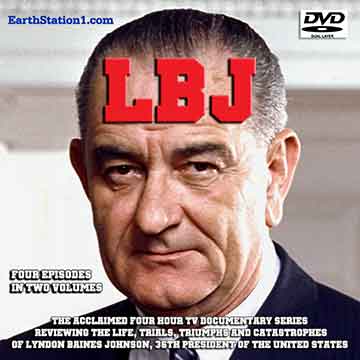
September 9, 1965: The Aftermath Of World
War II: The Cold War: Progressivism: Progressivism In The United
States: Liberalism: Liberalism In The United States: The
Presidency Of Lyndon B. Johnson: The Great Society: The Department
Of Housing And Urban Development Act: -- With President Lyndon B.
Johnson's signing of The Department Of Housing And Urban
Development Act into law, The United States Department Of Housing
And Urban Development (HUD) is established as one of the executive
departments of the U.S. federal government. The act stipulated
that the department was to be created no later than November 8,
sixty days following the date of enactment. The actual
implementation was postponed until January 14, 1966, following the
completion of a special study group report on the federal role in
solving urban problems. HUD administers federal housing and urban
development laws. It is headed by the Secretary Of Housing And
Urban Development, who reports directly to the President of the
United States, and is a member of the president's Cabinet.
Although its beginnings were in the House And Home Financing
Agency, it was founded as a Cabinet department in 1965, as part of
the "Great Society" program of President Lyndon B.
Johnson, to develop and execute policies on housing and
metropolises. The idea of a department of Urban Affairs was
proposed in a 1957 report to President Dwight D. Eisenhower, led
by New York Governor Nelson A. Rockefeller. The idea of a
department of Housing And Urban Affairs was taken up by President
John F. Kennedy, with Pennsylvania Senator and Kennedy ally Joseph
S. Clark Jr. listing it as one of the top seven legislative
priorities for the administration in internal documents. The
headquarters of HUD is located in the Robert C. Weaver Federal
Building, a 10-story office building in Washington, D.C.c ompleted
in 1968. The structure is named for Dr. Robert C. Weaver, the
first Secretary of Housing and Urban Development and the first
African American Cabinet member. Built by the General Services
Administration, it is a prime example of Brutalist architecture,
an architectural style that emerged during the 1950s in the United
Kingdom, among the reconstruction projects of the post-war era, a
style considered appropriate to the mission of HUD. Brutalist
buildings are characterised by minimalist constructions that
showcase the bare building materials and structural elements over
decorative design. The style commonly makes use of exposed,
unpainted concrete or brick, angular geometric shapes and a
predominantly monochrome colour palette; other materials, such as
steel, timber, and glass, are also featured. Descending from the
modernist movement, brutalism is said to be a reaction against the
nostalgia of architecture in the 1940s. Derived from the Swedish
phrase nybrutalism, the term "new brutalism" was first
used by British architects Alison and Peter Smithson for their
pioneering approach to design. The style was further popularised
in a 1955 essay by architectural critic Reyner Banham, who also
associated the movement with the French phrases beton brut ("raw
concrete") and art brut ("raw art"). The building
was added to the National Register of Historic Places on August
26, 2008.
https://store.earthstation1.com/lbj-1991-tv-documentary-series-lyndon-johnson-dvd-download-usb-d1991.html
Today's
EarthStation1.com 15% (Or More!) Off Commemorative Memorial Title:
The Fabulous Sixties with Peter Jennings TV Docuseries MP4 Or DVD
Set
Today, September 9, 2026
September 9, 1968: Sports: The History Of
Sports: The History Of Sports In The United States: Tennis: The
History Of Tennis: First African Americans: The US Open Tennis
Championships (The US Open): The 1968 US Open Tennis Championship:
The 1968 US Open Tennis Men's Singles Championship: -- Arthur Ashe
defeated Tom Okker of the Netherlands in the men's finals of the
US Open Tennis Championship at Forest Hills Stadium, New York and
becomes the first African American male to win. The US Open Tennis
Championships is a hardcourt tennis tournament organized by the
United States Tennis Association annually in Queens, New York
City. It is chronologically the fourth and final of the four Grand
Slam tennis events, held after the Australian Open, French Open,
and Wimbledon. The US Open starts on the last Monday of August and
continues for two weeks, with the middle weekend coinciding with
the United States Labor Day holiday. All players participating
must be at least fourteen years old. The tournament is one of the
oldest tennis championships in the world, originally known as the
U.S. National Championships, for which men's singles and men's
doubles were first played in August 1881. It is the only Grand
Slam that was not affected by cancellation due to World War I and
World War II, nor interrupted by the COVID-19 pandemic in 2020.
The tournament consists of five primary championships: men's and
women's singles, men's and women's doubles, and mixed doubles. The
tournament also includes events for senior, junior, and wheelchair
players. Since 1978, the tournament has been played on acrylic
hardcourts at the USTA Billie Jean King National Tennis Center in
Flushing Meadows-Corona Park, Queens, New York City. Revenue from
ticket sales, sponsorships, and television contracts is used to
develop tennis in the United States. For example, in 2024 it
extended its partnership with Grey Goose vodka for the "Honey
Deuce", a cocktail consisting primarily of vodka, lemonade,
raspberry liqueur, and skewered balls of honeydew melon, that is
the official signature of the US Open.
https://store.earthstation1.com/decades-the-1960s-dvd-set-peter-jennings-tv-series-3-19603.html
Today's
EarthStation1.com 15% (Or More!) Off Commemorative Memorial Title:
The World: A Television History Documentary Series DVD, Download,
USB
Today, September 9, 2026
September 9, 1585: #BOTD: #HBD! Cardinal
Richelieu, French cardinal and politician (d. December 4, 1642) is
#born Armand Jean du Plessis in Paris, France. Cardinal Armand
Jean du Plessis, 1st Duke of Richelieu and Fronsac, commonly
referred to as Cardinal Richelieu (French: Cardinal de Richelieu)
was a French clergyman, nobleman, and statesman. He was
consecrated as a bishop in 1607 and was appointed Foreign
Secretary in 1616. Richelieu soon rose in both the Catholic Church
and the French government, becoming a cardinal in 1622, and King
Louis XIII's chief minister in 1624. He remained in office until
his death in 1642. He sought to consolidate royal power and crush
domestic factions. By restraining the power of the nobility, he
transformed France into a strong, centralized state. His chief
foreign policy objective was to check the power of the
Austro-Spanish Habsburg dynasty, and to ensure French dominance in
the Thirty Years' War that engulfed Europe. Although he was a
cardinal, he did not hesitate to make alliances with Protestant
rulers in attempting to achieve his goals. While a powerful
political figure, events like the Day of the Dupes, a day in
November 1630 on which the enemies of Cardinal Richelieu
mistakenly believed that they had succeeded in persuading the
French King to dismiss Richelieu from power, show that in fact he
very much depended on the king's confidence to keep this power. He
was succeeded by Cardinal Mazarin, whose career he had fostered.
As alumnus of the University of Paris and headmaster of the
College of Sorbonne, he renovated and extended the institution.
Richelieu was also famous for his patronage of the arts; most
notably, he founded the Academie Francaise (the French Academy),
the learned society responsible for matters pertaining to the
French language. Richelieu is also known by the sobriquet
l'Eminence rouge ("the Red Eminence"), from the red
shade of a cardinal's clerical dress and the style "eminence"
as a cardinal. As an advocate for Samuel de Champlain and of the
retention of New France, he founded the Compagnie des
Cent-Associes and saw the Treaty of Saint-Germain-en-Laye return
Quebec City to French rule under Champlain, after the settlement
had been taken by the Kirkes in 1629. This in part allowed the
colony to eventually develop into the heartland of Francophone
culture in North America. Richelieu has been depicted in popular
fiction frequently, most notably as a leading character in
Alexandre Dumas's novel The Three Musketeers and its numerous film
adaptations. Cardinal Richelieu died at the age of 57 of a
terrible mix of long-term ailments: recurrent fevers (possibly
malaria), strangury (painful, frequent urination of small
volumes), intestinal tuberculosis with fistula (an abnormal
connection between the anal canal's internal opening and external
closing areas) migraines, suppurating (puss discharge) and
tubercular osteitis (bone inflammation) of the right arm, and
bloody coughs (after his death, his lungs were found to have
extensive cavities and caseous necrosis). His doctors continued to
bleed him frequently, further weakening him. As he felt his death
approaching, he named Mazarin, one of his most faithful followers,
to succeed him as chief minister to the King. His body was
embalmed and interred at The Church Of The Sorbonne. During the
French Revolution, the corpse was removed from its tomb, and the
mummified front of his head, having been removed and replaced
during the original embalming process, was stolen. It ended up in
the possession of Nicholas Armez of Brittany by 1796, and he
occasionally exhibited the well-preserved face. His nephew,
Louis-Philippe Armez, inherited it and also occasionally exhibited
it and lent it out for study. In 1866, Napoleon III persuaded
Armez to return the face to the government for re-interment with
the rest of Richelieu's body. An investigation of subsidence of
the church floor enabled the head to be photographed in 1895.
https://store.earthstation1.com/the-world-a-television-history-4-dual-layer-dvds-all-26-sh426.html
Today's
EarthStation1.com 15% (Or More!) Off Commemorative Memorial Title:
The Yellowstone Fires Of 1988 Documentary DVD, Download, USB Drive
Today, September 9, 2026
September 9-10, 1988: Natural Disasters:
Natural Disasters In The United States: Fires: Conflagrations:
Conflagrations In The United States: Wildfires (Forest Fires,
Bushfires, Brushfires, Wildland Fires, Rural Fires): The
Yellowstone Fires Of 1988: The North Fork Fire: -- The night of
the 9th and the morning of September 10, The North Fork Fire
jumped a fireline along its northeastern flank and approached
Mammoth Hot Springs where a large concentration of historical
structures as well as the Park Headquarters is located. Rain and
snow arrived in time to slow the fires before they threatened the
complex. By the time The North Fork Fire finally died down, it was
responsible for 60% of the burned area within the park; more than
400,000 acres (1,600 km2). The day prior, all of Yellowstone
National Park is closed to all non-emergency personnel for the
first time in its history. On September 5-7, 1988, a dry front
pushed flames along the southern section of The North Fork Fire,
the largest fire in Yellowstone National Parkm towards the large
Old Faithful visitor complex adjacent to the Upper Geyser Basin.
All non-emergency personnel were ordered to be evacuated; however,
political issues influenced National Park Service management
directives and the complex was not completely closed to incoming
tourists, with some visitors still arriving at Old Faithful not
long before the intense fire hit by mid afternoon. An all out
aerial bombardment with air tankers dropping fire retardant
failed. Firefighters concentrated on structure protection,
especially those of historical significance such as the Old
Faithful Inn, using fire engines and portable water pumping
systems to keep the roofs and other surfaces of the structures
wet. 1,200 firefighters including 120 military personnel dug fire
lines and cleared away brush near structures. Winds crested up to
80 miles per hour (130 km/h) as the fire approached from the west.
The fires spread to forested sections near to, but generally away
from, major structures, but 19 small structures were destroyed and
there was also extensive damage to an old dormitory. The fire was
so intense that vehicles left near the fire had their wheels
melted, windshields shattered and paint scorched. Though most of
the Old Faithful complex had been spared, the park service decided
that for the first time, the entire park would be closed to
non-emergency personnel on September 8. The Yellowstone Fires Of
1988 collectively formed the largest wildfire in the recorded
history of Yellowstone National Park in the United States.
Starting as many smaller individual fires, the flames quickly
spread out of control due to drought conditions and increasing
winds, combining into one large conflagration which burned for
several months. The fires almost destroyed two major visitor
destinations and, on September 8, 1988, the entire park closed to
all non-emergency personnel for the first time in its history.
Only the arrival of cool and moist weather in the late autumn
brought the fires to an end. A total of 793,880 acres (3,213 km2),
or 36 percent of the park, was affected by the wildfires.
Thousands of firefighters fought the fires, assisted by dozens of
helicopters and fixed-wing aircraft which were used for water and
fire retardant drops. At the peak of the effort, more than 9,000
firefighters were assigned to the park. With fires raging
throughout the Greater Yellowstone Ecosystem and other areas in
the western United States, the staffing levels of the National
Park Service and other land management agencies were inadequate
for the situation; more than 4,000 U.S. military personnel were
soon brought in to assist in wildfire suppression efforts. The
firefighting effort cost 120M USD (260M USD in 2020). Losses to
structures were minimized by concentrating firefighting efforts
near major visitor areas, keeping property damage down to 3M USD
(6M USD as of 2020). No firefighters died while fighting the
Yellowstone fires, though there were two fire-related deaths
outside the park. Before the late 1960s, fires were generally
believed to be detrimental for parks and forests, and management
policies were aimed at suppressing fires as quickly as possible.
However, as the beneficial ecological role of fire became better
understood in the decades before 1988, a policy was adopted of
allowing natural fires to burn under controlled conditions, which
proved highly successful in reducing the area lost annually to
wildfires. In contrast, in 1988, Yellowstone was overdue for a
large fire, and, in the exceptionally dry summer, many smaller
"controlled" fires combined. The fires burned
discontinuously, leaping from one patch to another, leaving
intervening areas untouched. Intense fires swept through some
regions, burning everything in their paths. Tens of millions of
trees and countless plants were killed by the wildfires, and some
regions were left looking blackened and dead. However, more than
half of the affected areas were burned by ground fires, which did
less damage to hardier tree species. Not long after the fires
ended, plant and tree species quickly reestablished themselves,
and native plant regeneration has been highly successful. The
Yellowstone Fires Of 1988 were unprecedented in the history of the
National Park Service, and led to many questions about existing
fire management policies. Media accounts of mismanagement were
often sensational and inaccurate, sometimes wrongly reporting or
implying that most of the park was being destroyed. While there
were temporary declines in air quality during the fires, no
adverse long-term health effects have been recorded in the
ecosystem and, contrary to initial reports, few large mammals were
killed by the fires, though there was a subsequent reduction in
the number of moose which has yet to rebound.
https://store.earthstation1.com/the-yellowstone-fires-of-1988-documentary1988.html
Today's
EarthStation1.com 15% (Or More!) Off Commemorative Memorial Title:
Washington, D.C. History Video Set DVD, MP4 Download, USB Flash
Drive
Today, September 9, 2026
September 9, 1791: The United States: The
History Of The United States: The District Of Columbia (D.C.): The
History Of The District Of Columbia: Washington, D.C.: The History
Of Washington, D.C.: -- The three commissioners President George
Washington appointed to supervise the planning, design and
acquisition of property in the federal district and capital city,
for the purposes of constructing the nation's new federal city
(Thomas Johnson, Daniel Carroll, and David Stuart), agree to name
the federal district "The Territory of Columbia,"
today's District Of Columbia, and the federal city as the "City
of Washington", after President Washington, today's
Washington, D.C..
https://store.earthstation1.com/washington-dc-history-videos-dvd-mp4-download-usb-driv4.html
Today's
EarthStation1.com 15% (Or More!) Off Commemorative Memorial Title:
Pirates 12 Part Documentary Series MP4 Video Download DVD
Today, September 9, 2026
September 9, 1000: The Vikings: The
Viking Age (793-1066 CE): Viking Naval Battles: The Battle Of
Svolder (The Battle Of Svold, The Battle Of Swold): -- #DOTD:
#RIP: Olaf Tryggvason, numbered as Olaf I, King of Norway from 995
to 1000 (Birthdate Unknown, 960s) #dies at The Battle Of Svolder,
a large naval battle during the Viking age, fought in the western
Baltic Sea between King Olaf of Norway and an alliance of the
Kings of Denmark and Sweden and Olaf's enemies in Norway. The
backdrop of the battle was the unification of Norway into a single
independent state after longstanding Danish efforts to control the
country, combined with the spread of Christianity in Scandinavia.
========= Olaf Tryggvason was the son of Tryggvi Olafsson, king of
Viken (Vingulmark, and Ranrike), and, according to later sagas,
the great-grandson of Harald Fairhair, first King of Norway. Olaf
was important in the conversion of the Norse to Christianity, but
he did so forcibly within his own kingdom. He is said to have
built the first Christian church in Norway in 995, and to have
founded the city of Trondheim in 997. A statue dedicated to him is
located in the city's central plaza. Historical information on
Olaf is sparse. He is mentioned in some contemporary English
sources, and some skaldic poems. The oldest narrative source
mentioning him briefly is Adam of Bremen's Gesta Hammaburgensis
ecclesiae pontificum of circa 1070. In the 1190s, two Latin
versions of "Olafs saga Tryggvasonar" were written in
Iceland, by Oddr Snorrason and Gunnlaugr Leifsson - these are now
lost, but are thought to form the basis of later Norse versions.
Snorri Sturluson gives an extensive account of Olaf in the
Heimskringla saga of circa 1230, using Oddr Snorrason's saga as
his primary source. Modern historians do not assume that these
late sources are accurate, and their credibility is debated. The
most detailed account is named Olafs saga Tryggvasonar en mesta
("Greatest Saga of Olafr Tryggvason") and is recorded in
the Flateyjarbok, and in the early 15th-century Bergsbok.
========= King Olaf Tryggvason was sailing to, or home from, an
expedition in Wendland (Pomerania), when he was ambushed by an
alliance of Svein Forkbeard, King of Denmark, Olof Skotkonung
(also known as Olaf Eiriksson or Olaf the Swede), King of Sweden,
and Eirik Hakonarson, Jarl of Lade. According to the Saga of King
Olaf I Tryggvason, he had 60 warships plus the contribution of 11
warships from the Jomvikings His ships were captured one by one,
last of all the Ormen Lange, which Jarl Eirik captured as Olaf
threw himself into the sea. After the battle, Norway was ruled by
the Jarls of Lade allied (as a suzerain) to both the Danish Crown
and the Commonwealth of Uppsala, Sweden. The exact location of the
battle is disputed, and depends on which group of sources is
preferred: Adam of Bremen places it in Oresund, while Icelandic
sources place the battle near an island called Svolder, which is
otherwise unknown. The most detailed sources on the battle, the
kings' sagas, were written approximately two centuries after it
took place. Historically unreliable, they offer an extended
literary account describing the battle and the events leading up
to it in vivid detail. The sagas ascribe the causes of the battle
to Olaf Tryggvason's ill-fated marriage proposal to Sigrid the
Haughty and his problematic marriage to Thyri, sister of Svein
Forkbeard. As the battle starts Olaf is shown dismissing the
Danish and Swedish fleets with ethnic insults and bravado while
admitting that Eirik Hakonarson and his men are dangerous because
"they are Norwegians like us". The best known episode in
the battle is the breaking of Einarr THambarskelfir's bow, which
heralds Olaf's defeat. In later centuries, the saga descriptions
of the battle, especially that in Snorri Sturluson's Heimskringla,
have inspired a number of ballads and other works of literature.
https://store.earthstation1.com/pirates-12-part-documentary-series-mp4-video-download-124.html
Today's
EarthStation1.com 15% (Or More!) Off Commemorative Memorial Title:
Damn The Defiant! H.M.S. Defiant 1962 RN Alec Guinness DVD MP4 USB
Today, September 9, 2026
September 9, 1754: #BOTD: William Bligh,
English admiral of the British Royal Navy and politician, 4th
Governor of New South Wales (d. December 7, 1817) is #born either
in Plymouth, Devon, or St Tudy, Cornwall, England, infamous for
The Mutiny On The Bounty that occurred during his command of HMS
Bounty in 1789, and for the epic journey he and his loyal men made
to Timor, some 3,618 nautical miles (6,701 km; 4,164 mi), after
being set adrift in Bounty's launch by the mutineers. Fifteen
years after the Bounty mutiny, on August 13, 1806, he was
appointed Governor of New South Wales in Australia, with orders to
clean up the corrupt rum trade of the New South Wales Corps. His
actions directed against the trade resulted in the so-called Rum
Rebellion, during which Bligh was placed under arrest on January
26, 1808 by the New South Wales Corps and deposed from his
command, an act which the British Foreign Office later declared to
be illegal. Bligh died of cancer in Bond Street in Lambeth,
London, England, and was buried in a family plot at St. Mary's,
Lambeth (this church is now the Garden Museum). His tomb was
notable for its use of Coade stone (Lithodipyra), a compound of
clay and other materials which was moulded in imitation of carved
stonework and fired in a kiln. This stoneware was produced by
Eleanor Coade at her factory in Lambeth. The tomb is topped by an
eternal flame, not a breadfruit. A plaque marks Bligh's house, one
block east of the Garden Museum at 100 Lambeth Road, across the
street from the Imperial War Museum.
https://store.earthstation1.com/damn-the-defiant-alec-guinness-napoleonic-british-naval-dvd.html
Today's
EarthStation1.com 15% (Or More!) Off Commemorative Memorial Title:
The Last Cause Spanish Civil War TV Series + Bonus MP4 Download
DVD
Today, September 9, 2026
September 9, 1936: The Interwar Period
(The Interbellum, Between The Wars): The Spanish Civil War: 1936
In The Spanish Civil War: The 1936 Naval Revolt (Portuguese:
Revolta Dos Marinheiros De 1936, "The 1936 Sailors' Revolt")
(The Tagus Boats Mutiny [Portugeuse: Motim Dos Barcos Do Tejo]):
-- The crews of Portuguese Navy frigate NRP Afonso de Albuquerque
and destroyer Dao mutinied against the Salazar dictatorship's
support of General Franco's coup and declared their solidarity
with the Spanish Republic. The mutiny was organized by the
Revolutionary Organization of the Fleet (Organizacao
Revolucionaria da Armada, ORA), a left-wing group with links to
the Portuguese Communist Party. The mutiny broke out among
communist sailors in the Portuguese Navy's two newest warships,
moored in the estuary of the Tagus River near Lisbon. : the aviso
Afonso de Albuquerque (an aviso ship was originally a kind of
dispatch boat or "advice boat", carrying orders before
the development of effective remote communication) and the
destroyer Dao, one of five Douro-class destroyer built for the
Portuguese Navy during the 1930s. Their aim was ostensibly to take
part in the Spanish Civil War alongside the Republicans by sailing
to a Republican-held port in the Mediterranean. However, the
revolt failed and the convicted sailors were the first to be sent
to the Tarrafal concentration camp established in the Cape Verde
Islands to house political prisoners. The Portuguese fleet ahd
laid at anchor in the estuary of the Tagus River on September 8,
1936. The rebels planned to seize control of the ships present and
the coastal forts. At 03:00 their ships were to begin their
departure, following each other out at fifteen minute intervals.
No word was received from the fort garrisons, so the rebels' plan
would only work if they could embark before shore batteries came
into action. However, a wireless operator tipped off the
Portuguese Admiralty to the plan at around 01:00. A boat was
immediately dispatched to survey the situation of the fleet. Upon
seeing the Admiralty launch, most of the Portuguese sailors
realized their plot had been discovered and chose not to revolt.
By then the crews of the Afonso de Albuquerque and Dao, two of the
navy's most modern ships, had already mutinied, forcing their
officers below deck at gunpoint. The sailors on Afonso attempted
to lure the Admiralty officers aboard, but the launch fled and the
crew opened fire with machine guns. It took almost an hour before
the alarm was raised ashore. When the forts were finally alerted,
they could not target the mutineers' ships due to a heavy mist.
The rebels were hesitant to leave without further orders from
their leaders, and did not attempt a breakout until daylight. The
Portuguese naval minister ordered coastal artillery to fire on any
vessel attempting to leave the harbour. At 07:30 Afonso and Dao
raised steam and proceeded down the river at about 8 knots (15
km/h; 9.2 mph). By then the mist had cleared and the shore
batteries opened fire. Afonso responded but was soon struck. A
loyal submarine opened fire on her with a machine gun. Afonso's
bridge was destroyed in the engagement and her engines were
crippled. Dao, caught in the cross-fire between two forts, was
also hit and both ships ran aground. The crews raised white flags
to signal their surrender. Government forces boarded Afonso and
arrested its crew. In an attempt to conceal their actions, several
sailors stripped off their uniforms and attempted to swim ashore.
Loyal Portuguese troops raked them with machine gun fire. The
rebels were rounded up near the Belem Tower and taken prisoner.
The leader of the revolt, a sailor from Dao, committed suicide.
The Portuguese Navy Ministry reported that twelve sailors were
killed and twenty wounded. 238 were arrested and deported to the
Tarrafal concentration camp on Santiago, Portuguese Cape Verde.
The Ministry dismissed both crews in their entirety, reinstating
sailors only if they were able to prove they resisted the mutiny.
An investigation was also opened into discipline aboard the aviso
Bartolomeu Dias. According to historian Glyn Stone, the revolt was
"easily suppressed and remained an isolated incident"
and did not pose a threat to Salazar. The German Ambassador to
Portugal, Oswald von Hoyningen-Huene, reported that "it is
even said that Salazar...provoked the dramatic development, or at
the very least allowed matters to run their usual course."
The government framed the mutiny as a communist plot to surrender
the Portuguese ships to the Spanish Republican Navy. On September
9, Salazar issued an official statement which depicted the Spanish
Civil War as an international conflict and warned of the dangers
of political contagion. He appealed for the creation of a new
armed force to counter such a threat. The next day he introduced a
law forcing all public servants to swear allegiance to the
principles of his regime. On September 30, an anti-communist
paramilitary force, the Legiao Portuguesa, was formed. Communist
activity in the Portuguese Armed Forces declined after the mutiny
and remained minimal in the following years. Though it had dealt
with the mutiny with force, the Portuguese government feared
further revolts. Several days after the event the British press
reported that several Portuguese Army units had rebelled,
prompting the Portuguese embassy in London to issue a denial and
declare the foreign press was depicting the Portuguese situation
as chaotic to the Spanish government's benefit, and therefore the
government was "obliged to intensify its offensive against
communism". The mutiny ultimately strengthened Portuguese
support for Franco's faction in the Spanish Civil War. In October
the Portuguese government officially severed relations with the
Spanish Republican government. The mutiny forms of the backdrop
for the 1984 novel The Year of the Death of Ricardo Reis by Jose
Saramago.
https://store.earthstation1.com/the-last-cause-spanish-civil-war-all-3-tv-shows-dual-layer-dv3.html
Today's
EarthStation1.com 15% (Or More!) Off Commemorative Memorial Title:
The Struggles For Poland TV Series + Bonus MP4 Video Download DVD
Set
Today, September 9, 2026
September 9, 1939: The European Civil
War: World War II: The Second European War (The European Theater
Of World War II): The Invasion Of Poland (The September Campaign,
The Polish Campaign, The War Of Poland Of 1939, The Polish
Defensive War Of 1939): The Battle Of Hel (Polish: Obrona Helu,
"The Defense Of Hel"): -- The longest battle battle of
the Invasion Of Poland is fought for the longest-defended pocket
of Polish Army resistance. The Battle Of Hel was fought on the Hel
Peninsula, of the Baltic Sea coast. The defense of the Hel
Peninsula took place around the Hel Fortified Area, a system of
Polish fortifications that had been constructed in the 1930s near
the interwar border with the German Third Reich. Beginning on
September 20, 1939, after the Polish Army Pomorze had been
defeated in the Battle of Tuchola Forest and after other Polish
coastal strongholds had capitulated in the Battle of Westerplatte,
Battle of Gdynia and the Battle of Kepa Oksywska, Hel was the only
substantial pocket of Polish military resistance left in northern
Poland. It was also the site of the invasion's only naval surface
engagement. The Germans blockaded the defenders of the Hel
Peninsula and did not launch major land operations until the end
of September 1939. Some 2,800 Polish soldiers under Rear Admiral
Wlodzimierz Steyer, part of the Land Coastal Defence formation,
defended the Hel Fortified Area for about 32 days, until they
surrenderedb due to low supplies and morale.
https://store.earthstation1.com/the-struggles-for-poland-dvd-set-all-9-shows-5-dis95.html
Today's
EarthStation1.com 15% (Or More!) Off Commemorative Memorial Title:
Winston Churchill: The Valiant Years TV Series DVD, MP4, USB Drive
Today, September 9, 2026
September 9, 1943: The European Civil
War: World War II: The Second European War (The European Theater
Of World War II): The Mediterranean And Middle East Theater Of
World War II (The Mediterranean Theater Of War) The Italian
Campaign Of World War II (The Liberation Of Italy): The Allied
Invasion Of Italy: Operation Avalanche, Operation Slapstick: --
Operation Avalanche commences as US, UK and Canadian forces under
US General Mark Clark make amphibious landings near the port of
Salerno on the western coast of Italy, with the port city of
Naples as their immediate objective. Simultaneously, Operation
Slapstick began as the British 1st Airborne Division, commanded by
Major-General George Hopkinson, land from the sea at the Italian
port of Taranto. The Italians had withdrawn from the war the day
before these two operations, but the Allies of Operation Avalanche
landed in an area defended by German troops, and the British
landings were unopposed. Initial quick gains by the Allies in both
operations soon met strong resistance from German forces. The
Allied invasion of Italy begins on the same day that U.S. General
Dwight D. Eisenhower and Italian Marshal Pietro Badoglio sign the
Armistice Of Cassibile aboard the Royal Navy battleship HMS Nelson
off Malta. The Allied invasion of Italy was undertaken by General
Sir Harold Alexander's 15th Army Group (comprising General Mark W.
Clark and General Bernard Montgomery's British Eighth Army) and
followed the successful invasion of Sicily.
https://store.earthstation1.com/winston-churchill-the-valiant-years-dvd-set-all-26-shows-7-d267.html
Today's
EarthStation1.com 15% (Or More!) Off Commemorative Memorial Title:
Gorbachev: The Rise And Fall + Oleg Gordievsky Doc MP4 Download
DVD
Today, September 9, 2026
September 9, 1990: The Aftermath Of World
War II: The Cold War: The Cold War (1985-1991) (The End Of The
Cold War): The Gulf War (The Persian Gulf War, Gulf War I): The
Invasion Of Kuwait: -- President of the United States George H.W.
Bush and President of the Soviet Union Mikhail Gorbachev meet in
Helsinki to discuss the Iraqi invasion. In a press conference, the
presidents demand Iraq leave Kuwait under the UNSC Resolutions of
660, 661, 662, 664 and 665. On September 2, United Nations
Secretary-General Javier Perez de Cuellar, after having traveled
to Baghdad on August 29 to meet Foreign Minister of Iraq Tariq
Aziz, returned from Baghdad without any agreement with the
Government of Iraq. On August 18, 1990, United Nations Security
Council Resolution 664 (UNSCR 664) was adopted unanimously, which
recalled Iraq's obligations under international law and acting
under Chapter VII of the United Nations Charter, demanded that
Iraq permit and facilitate the departure of nationals from third
countries from within Iraq and Kuwait, calling for consular and
diplomatic access to the third state nationals. UNSCR 664 further
reaffirmed resolutions UNSCR 660, adopted August 2, which
condemned the invasion and demanded Iraq withdraw immediately and
unconditionally to positions as they were on August 1. 1990; UNSCR
661 of August 6, which took steps to implement international
sanctions on Iraq; and UNSCR 662, adopted unanimously August 9,
which declared the annexation of Kuwait by Iraq illegal in any
form. UNSCR 664 went on to demand that Iraq take no action that
would jeopardise the safety of the nationals, reaffirming that the
annexation of Kuwait is illegal, therefore demanding that Iraq
rescind its orders to close consular and diplomatic missions in
Kuwait and the removal of diplomatic immunity of their personnel.
Thousands of foreigners were in Iraq and Kuwait at the time of the
Iraqi invasion, and the Council denounced Iraq's decision to use
foreign nationals as "human shields" at strategic sites.
It finally requested the Secretary-General Javier Perez de Cuellar
to report on the compliance with the current resolution as soon as
possible. Operation Desert Shield had been officially launched on
August 8, as the day before that President George Bush ordered a
massive military buildup to prevent further Iraqi military
advances, with the first American soldiers being sent to Saudi
Arabia that same day: 15,000 U.S. troops, 32 destroyers and 100
helicopters and fighter planes. Soon after his conquest of Kuwait,
Saddam began verbally attacking the Saudis. He argued that the
US-supported Saudi state was an illegitimate and unworthy guardian
of the holy cities of Mecca and Medina. He combined the language
of the Islamist groups that had recently fought in Afghanistan
with the rhetoric Iran had long used to attack the Saudis. Acting
on the Carter Doctrine's policy that the United States would use
military force, if necessary, to defend its national interests in
the Persian Gulf, and out of fear the Iraqi Army could launch an
invasion of Saudi Arabia, US President George Bush quickly
announced that the US would launch a "wholly defensive"
mission to prevent Iraq from invading Saudi Arabia under the
codename Operation Desert Shield. Operation Desert Shield began on
7 August 1990 when US troops were sent to Saudi Arabia due also to
the request of its monarch, King Fahd, who had earlier called for
US military assistance. This "wholly defensive" doctrine
was quickly abandoned when, on 8 August, Iraq declared Kuwait to
be Iraq's 19th province and Saddam named his cousin, Ali Hassan
Al-Majid, as its military-governor. The US Navy dispatched two
naval battle groups built around the aircraft carriers USS Dwight
D. Eisenhower and USS Independence to the Persian Gulf, where they
were ready by 8 August. The US also sent the battleships USS
Missouri and USS Wisconsin to the region. A total of 48 US Air
Force F-15s from the 1st Fighter Wing at Langley Air Force Base,
Virginia, landed in Saudi Arabia, and immediately commenced round
the clock air patrols of the Saudi-Kuwait-Iraq border to
discourage further Iraqi military advances. They were joined by 36
F-15 A-Ds from the 36th Tactical Fighter Wing at Bitburg, Germany.
The Bitburg contingent was based at Al Kharj Air Base,
approximately an hour south east of Riyadh. The 36th TFW would be
responsible for 11 confirmed Iraqi Air Force aircraft shot down
during the war. There were also two Air National Guard units
stationed at Al Kharj Air Base, the South Carolina Air National
Guard's 169th Fighter Wing flew bombing missions with 24 F-16s
flying 2,000 combat missions and dropping 4 million pounds of
munitions, and the New York Air National Guard's 174th Fighter
Wing from Syracuse flew 24 F-16s on bombing missions. Military
buildup continued from there, eventually reaching 543,000 troops,
twice the number used in the 2003 invasion of Iraq. Much of the
material was airlifted or carried to the staging areas via fast
sealift ships, allowing a quick buildup.
https://store.earthstation1.com/gorbachev-the-rise-and-fall-dvd-mp4-usb-flash-driv4.html
Today's
EarthStation1.com 15% (Or More!) Off Commemorative Memorial Title:
The Sword Of Islam: The Islamic Revolution DVD MP4 USB Flash Drive
Today, September 9, 2026
September 9, 1970: Aviation: The History
Of Aviation: The History Of Civil Aviation: Hijackings: Aircraft
Hijackings (Airplane Hijackings, Skyjackings, Plane Hijacking,
Plane Jackings, Air Robberies, Air Piracy, Aircraft Piracy,
Hijackings): The Arab-Israeli Conflict: The Israeli-Palestinian
Conflict: Terrorism: Palestinian Terrorism: The Popular Front For
The Liberation Of Palestine (PFLP) (Arabic: Al-Jabha Ash-Sha'biyya
Li-Tahrir Filastin): The Dawson's Field Hijackings: BOAC Flight
775: -- BOAC Flight 775, a Vickers VC10 airliner coming from
Bahrain, was hijacked by a Popular Front For The Liberation Of
Palestine (PFLP) sympathizer and flown to Dawson's Field in
Jordan, the fifth plane in four days so taken. At the beginning of
September 1970, members of the PFLP hijacked four airliners bound
for New York City and one for London. Three aircraft were forced
to land at Dawson's Field, a remote desert airstrip near Zarqa,
Jordan, formerly Royal Air Force Station Zarqa, which then became
PFLP's "Revolutionary Airport". On September 6, TWA
Flight 741 from Frankfurt (a Boeing 707) and Swissair Flight 100
from Zurich (a Douglas DC-8) were forced to land at Dawson's
Field. On the same day, the hijacking of El Al Flight 219 from
Amsterdam (another 707) was foiled: hijacker Patrick Arguello was
shot and killed, and his partner Leila Khaled was subdued and
handed over to British authorities in London. Two PFLP hijackers,
who were prevented from boarding the El Al flight, hijacked
instead Pan Am Flight 93, a Boeing 747, diverting the large plane
first to Beirut and then to Cairo, rather than to the small
Jordanian airstrip. The fifth plane was taken to Dawson's Field in
order to pressure the British to free Khaled. The Dawson's Field
Hijackings was the second instance of mass aircraft hijacking, the
first being an escape from communist Czechoslovakia in 1950. While
the majority of the 310 hostages were transferred to Amman and
freed on September 11, the PFLP segregated the flight crews and
Jewish passengers, keeping the 56 Jewish hostages in custody,
while releasing the non-Jews. Six hostages in particular were kept
because they were men and American citizens, not necessarily Jews:
Robert Norman Schwartz, a U.S. Defense Department researcher
stationed in Thailand; James Lee Woods, Schwartz's assistant and
security detail; Gerald Berkowitz, an American-born Jew and
college chemistry professor; Rabbi Avraham Harari-Raful and his
brother Rabbi Yosef Harari-Raful, two Sephardi Brooklyn school
teachers; and John Hollingsworth, a U.S. State Department
employee. Schwartz, whose father was Jewish, was a convert to
Catholicism. On September 12, prior to their announced deadline,
the PFLP used explosives to destroy the empty planes, as they
anticipated a counterstrike. The PFLP's exploitation of Jordanian
territory was an example of the increasingly autonomous Arab
Palestinian activity within the Kingdom of Jordan - a serious
challenge to the Hashemite monarchy of King Hussein. Hussein
declared martial law on September 16 and from September 17 to 27,
his forces deployed into Palestinian-controlled areas in what
became known as Black September in Jordan, nearly triggering a
regional war involving Syria, Iraq, and Israel. A swift Jordanian
victory, however, enabled a September 30 deal in which the
remaining PFLP hostages were released in exchange for Khaled and
three PFLP members in a Swiss prison.
https://store.earthstation1.com/the-sword-of-islam-the-islamic-revolution-dvd-mp4-usb-flash-driv4.html
Today's
EarthStation1.com 15% (Or More!) Off Commemorative Memorial Title:
Arab And Jew: Wounded Spirits In A Promised Land DVD, Download,
USB
Today, September 9, 2026
September 9, 1993: The Cold War: The
Aftermath Of The Cold War: The Arab-Israeli Conflict: The
Arab-Israeli Peace Process: The Israeli-Palestinian Peace Process:
The Oslo Process: The Oslo Accords: -- In accordance with The Oslo
Accords signed on August 20, 1993, The Palestine Liberation
Organization officially recognizes Israel as a legitimate state.
After rounds of secret negotiations in Oslo, Norway, and agreement
was reached resulting in the recognition by the PLO of the State
of Israel and the recognition by Israel of the PLO as the
representative of the Palestinian people and as a partner in
negotiations. Accordingly, the Oslo Accords were signed, followed
by a public ceremony in Washington, D.C. the following month. The
Oslo Accords are a set of agreements between the Government of
Israel and the Palestine Liberation Organization (PLO): the Oslo I
Accord, signed in Washington, D.C., in 1993; and the Oslo II
Accord, signed in Taba, Egypt, in 1995. The Oslo Accords marked
the start of the Oslo process, a peace process aimed at achieving
a peace treaty based on United Nations Security Council
Resolutions 242 and 338, and at fulfilling the "right of the
Palestinian people to self-determination."
https://store.earthstation1.com/arab-and-jew-wounded-spirits-in-a-promised-land-dvd.html
Today's
EarthStation1.com 15% (Or More!) Off Commemorative Memorial Title:
633 Squadron (1964) WWII Aviation Drama DVD, MP4 Download, USB
Drive
Today, September 9, 2026
September 9, 1923: #BOTD: #HBD! Cliff
Robertson, American actor with a film and television career that
spanned half a century (d. September 10, 2011) is #born Clifford
Parker Robertson III in La Jolla, California. Cliff Robertson
portrayed a young John F. Kennedy in the 1963 film PT 109, and won
the 1968 Academy Award for Best Actor for his role in the movie
Charly. On television, he portrayed retired astronaut Buzz Aldrin
in the 1976 adaptation of Aldrin's autobiographic Return to Earth,
played a fictional character based on Director of Central
Intelligence Richard Helms in the 1977 miniseries Washington:
Behind Closed Doors, and portrayed Henry Ford in the 1987 Ford:
The Man and the Machine. His last well-known film appearances were
from 2002-2007 as Uncle Ben in the Spider-Man film trilogy. Cliff
Robertson died of natural causes in Stony Brook, New York, one day
after his 88th birthday. His body was cremated, and a private
funeral was held at St. Luke's Episcopal Church in East Hampton,
New York. He is interred at the Cedar Lawn Cemetery in Paterson,
New Jersey.
https://store.earthstation1.com/633-squadron-dvd-1964-raf-wwii-mosquito-aircraf6331964.html
Today's
EarthStation1.com 15% (Or More!) Off Commemorative Memorial Title:
The Machine That Changed The World: The Computer DVD MP4 Download
Today, September 9, 2026
September 9, 1940: The Industrial
Revolution: The Industrial Revolution: The Second Industrial
Revolution/The Third Industrial Revolution (1870s-Present): The
Computer: The History Of The Computer: The History Of Computing
Hardware: Analog Computers (Analogue Computers): Electromechanical
Computers: The History Of Computing: Remote Computer Operation: --
George Stibitz pioneers the first remote operation of a computer
when he used a teletype machine at Darmouth College to send
commands to the Complex Number Computer at the Bell Labs 463 West
Street headquarters building in New York City. George Robert
Stibitz (April 30, 1904 - January 31, 1995) is internationally
recognized as one of the fathers of the modern first digital
computer, and is the originator of the use of the word "digital"
to refer to calculating machinery, i.e. computers. He was a Bell
Labs researcher known for his work in the 1930s and 1940s on the
realization of Boolean logic digital circuits using
electromechanical relays as the switching element. In November
1937, George Stibitz, then working at Bell Labs, completed a
relay-based calculator he later dubbed the "Model K"
(for "kitchen table", on which he had assembled it),
which calculated using binary addition. Replicas of the "Model
K" now reside in the Computer History Museum, the Smithsonian
Institution, the William Howard Doane Library at Denison
University and the American Computer Museum in Bozeman, Montana
where the George R. Stibitz Computer and Communications Pioneer
Awards are granted. Bell Labs subsequently authorized a full
research program in late 1938 with Stibitz at the helm. Their
Complex Number Computer, completed in November 1939, was able to
do calculations on complex numbers. In a demonstration to the
American Mathematical Society conference at Dartmouth College in
September 1940, Stibitz used a teletype to send commands to the
Complex Number Computer in New York over telegraph lines. It was
the first computing machine ever used remotely. In April, 1942,
Stibitz attended a meeting of a division of the Office of
Scientific Research and Development (OSRD), charged with
evaluating various proposals for fire-control devices to be used
against Axis forces during World War II. Stibitz noted that the
proposals fell into two broad categories: "analog" and
"pulse." In a memo written after the meeting, he
suggested that the term "digital" be used in place of
"pulse," as he felt the latter term was insufficiently
descriptive of the nature of the processes involved. The word
"digit" at the time had two common meanings: the ten
fingers of one's hands, and the numbers 0 through 9. The adjective
"digital" was also in use, although it was not as
common. For example, among physicians, a "digital"
examination referred to the use of a doctor's finger to palpate
part of the body. Stibitz's memorandum was the first known use of
the term "digital" to refer to calculating machinery.
========= September 9, 1947: The Industrial Revolution: The Third
Industrial Revolution (1947-Present) (The Information Age, The
Computer Age, The Digital Age, The Digital Electronics Revolution,
The Silicon Age, The New Media Age, The Media Age): The Computer:
The History Of The Computer: Electromechanical Computers:
"Computer Bugs": The Harvard Mark II (The Aiken Relay
Calculator): -- The first case of a computer bug being found
occurs: a moth lodges in a relay of a Harvard Mark II computer at
Harvard University. The Harvard Mark II, also known as Aiken Relay
Calculator, was an electromechanical computer built under the
direction of Howard Aiken and was finished in 1947. It was
financed by the United States Navy. Howard Aiken and Grace Hopper
worked together to program and build the Mark II.
https://store.earthstation1.com/the-machine-that-changed-the-world-the-computer-dvd-mp4-downloa4.html
Today's
EarthStation1.com 15% (Or More!) Off Commemorative Memorial Title:
Mary, Queen Of Scots Vanessa Redgrave Glenda Jackson MP4 Download
DVD
Today, September 9, 2026
September 9, 1543: The English Monarchy
(The Monarchy Of The Kingdom Of England): The Scottish Monarchy
(The Monarchy Of The Kingdom Of Scotland): The Irish Monarchy (The
Monarchy Of The Kingdom Of Ireland): Coronations: The Coronation
Of Mary, Queen Of Scots: -- Mary, Queen Of Scots, is crowned Queen
Of Scotland at the age of nine months in the chapel of Stirling
Castle in the central Scottish town of Stirling, with "such
solemnity as they do use in this country, which is not very
costly", according to the report of Ralph Sadler and Henry
Ray of the Berwick Pursuivant, an English office of arms with the
main purpose of communicating between the English and Scottish
monarchs. Mary, Queen Of Scots, also known as Mary Stuart or Mary
I, Queen Of Scotland from December 14, 1542 to July 24, 1567
(December 8, 1542 - February 8, 1587) was born at Linlithgow
Palace, Scotland, to King James V and his French second wife, Mary
of Guise. The only surviving legitimate child of James V of
Scotland, she was six days old when her father died and she
acceded to the throne. She spent most of her childhood in France
while Scotland was ruled by regents, and in 1558, she married the
Dauphin of France, Francis. He ascended the French throne as King
Francis II in 1559, and Mary briefly became queen consort of
France, until his death in December 1560. Widowed, Mary returned
to Scotland, arriving in Leith on 19 August 1561. Four years
later, she married her first cousin, Henry Stuart, Lord Darnley,
but their union was unhappy. In February 1567, his residence was
destroyed by an explosion, and Darnley was found murdered in the
garden. James Hepburn, 4th Earl of Bothwell, was generally
believed to have orchestrated Darnley's death, but he was
acquitted of the charge in April 1567, and the following month he
married Mary. Following an uprising against the couple, Mary was
imprisoned in on an island in Loch Leven in the Perth and Kinross
local authority area of Scotland. On July 24, 1567, she was forced
to abdicate in favour of James VI, her one-year-old son by
Darnley. After an unsuccessful attempt to regain the throne, she
fled southwards seeking the protection of her first cousin once
removed, Queen Elizabeth I Of England. Mary had previously claimed
Elizabeth's throne as her own and was considered the legitimate
sovereign of England by many English Catholics, including
participants in a rebellion known as the Rising of the North.
Perceiving her as a threat, Elizabeth had her confined in various
castles and manor houses in the interior of England. After
eighteen and a half years in custody, Mary was found guilty of
plotting to assassinate Elizabeth in 1586. She was beheaded the
following year.
https://store.earthstation1.com/mary-queen-of-scots-vanessa-redgrave-glenda-jackson-mp4-download-dvd.html
Today's
EarthStation1.com 15% (Or More!) Off Commemorative Memorial Title:
Elizabeth R: A Year In The Life Of The Queen 1992 DVD, MP4, USB
Drive
Today, September 9, 2026
September 9, 2015: The United Kingdom:
The History Of The United Kingdom: Governments Of The United
Kingdom: Monarchs Of The United Kingdom: -- Elizabeth II becomes
the longest reigning monarch in the history of the United Kingdom.
Elizabeth II (born Elizabeth Alexandra Mary April 21, 1926) was
Queen of the United Kingdom, Canada, Australia, and New Zealand
from February 6, 1952 until her death on September 8, 2022.
Additionally, she was Head of the Commonwealth and Queen of 12
countries that ha became independent since her accession: Jamaica,
Barbados, the Bahamas, Grenada, Papua New Guinea, Solomon Islands,
Tuvalu, Saint Lucia, Saint Vincent and the Grenadines, Belize,
Antigua and Barbuda, and Saint Kitts and Nevis.
https://store.earthstation1.com/elizabeth-r-a-year-in-the-life-of-the-queen-1992-dvd-mp19924.html
Today's
EarthStation1.com 15% (Or More!) Off Commemorative Memorial Title:
The Good Old Time TV Theme Song MP3 CD, Audio Download, USB Drive
Today, September 9, 2026
September 9, 1952: #BOTD: #HBD! Angela
Cartwright, English-American actress primarily known for her roles
in movies and television, author, singer, photographer and beauty,
1960s cultural icon and sex symbol, best known as stepdaughter
Linda Williams in the long-running TV series The Danny Thomas
Show, as Penny Robinson in the 1960s television series Lost in
Space, and as Brigitta von Trapp in the 1965 film The Sound of
Music, is #born Angela Margaret Cartwright in Altrincham,
Cheshire, England. Her older sister is actress Veronica
Cartwright, celebrated and awarded for appearing in science
fiction and horror films. When Angela was 1 year old, her family
moved to Los Angeles via Canada. She made her first film
appearance at the age of three years as Paul Newman's character's
daughter in Somebody Up There Likes Me (1956), and appeared with
Rock Hudson and Sidney Poitier in Something of Value (1957).
Cartwright appeared for seven seasons in the CBS TV series The
Danny Thomas Show, opposite comedian Danny Thomas. She remained
close to Thomas after the series' cancellation until his death on
February 6, 1991. Cartwright played the role of Brigitta von Trapp
in The Sound of Music (1965). The film won five Academy Awards and
eclipsed Gone With The Wind as the highest-grossing film of
all-time. Cartwright played Penny Robinson in the TV series Lost
in Space (1965-68), whereby she became a cultural icon and sex
symbol for the 1960s generation. She made appearances on several
TV shows, including My Three Sons, Adam-12, and The Love Boat. She
was also cast in the television movies Scout's Honor (1980) and
played the role of Miss D'Angelo in High School U.S.A. (1983). She
played Theresa Mazzetti in Beyond the Poseidon Adventure (1979),
directed by Lost in Space producer Irwin Allen. Cartwright made a
cameo appearance as Reporter #2 in the 1998 Lost in Space film and
as Dr. Smith's mother in the third episode of the second season of
the 2018 Netflix reimagined Lost In Space series. Cartwright
married Steve Gullion in 1976. They have two children. She has
been a photographer for 30 years. Her work is displayed at her
studio in Studio City, Los Angeles.
https://store.earthstation1.com/tv-theme-song-mp3-cd-classic-old-time-televisio3.html
Today's
EarthStation1.com 15% (Or More!) Off Commemorative Memorial Title:
DJ Madness! 1950s-60s-70s Radio Shows DVD, MP3 Download, USB Drive
Today, September 9, 2026
September 9, 1945: #BOTD: #HBD! Dee Dee
Sharp, African American R & B singer, is #born Dione LaRue in
Philadelphia, Pennsylvania. She produced a string of successful
Billboard Hot 100 Top 10 hits: "Slow Twistin'" (with
Chubby Checker) (#3) for which she was uncredited on the label,
"Mashed Potato Time" (#2), "Gravy (For My Mashed
Potatoes)" (#9), "Ride!" (#5) and "Do the
Bird" (#10). Both "Mashed Potato Time" and "Ride!"
each sold over one million copies, and were awarded gold discs.
"Do the Bird" provided her only entry in the UK Singles
Chart, where it peaked at #46 in April 1963. She has appeared
several times on the American Bandstand, a syndicated
music-performance and dance television program, from 1962 to 1981,
and was also a regular feature on Dick Clark's Caravan of Stars
tours.
https://store.earthstation1.com/dj-radio-airchecks-mp3-dvd-1950s60s70s-dis319506070.html
Today's
EarthStation1.com 15% (Or More!) Off Commemorative Memorial Title:
Sonia Sanchez: Wear The New Day Well! DVD, MP4 Download, USB Drive
Today, September 9, 2026
September 9, 1934: #BOTD: #HBD! Sonia
Sanchez, African American poet, playwright, writer, professor and
activist, is #born Wilsonia Benita Driver in Birmingham, Alabama.
She was a leading figure in the Black Arts Movement and has
authored over a dozen books of poetry, as well as short stories,
critical essays, plays, and children's books. In the 1960s,
Sanchez released poems in periodicals targeted towards African
American audiences, and published her debut collection,
Homecoming, in 1969. In 1993, she received Pew Fellowship in the
Arts, and in 2001 was awarded the Robert Frost Medal for her
contributions to the canon of American poetry. She has been
influential to other African American poets, including Krista
Franklin.
https://store.earthstation1.com/sonia-sanchez-wear-the-new-day-well-dvd-download-usb-drive.html
Today's
EarthStation1.com #OnThisDay Commemorative Memorial Title: Guyana
Tragedy: The Story Of Jim Jones DVD, Video Download, USB Drive
Today, September 9, 2026 September 9, 2024: #DOTD: #RIP: James
Earl Jones, African American actor, famous for his film roles and
for his work in theatre, one of the few performers to achieve the
EGOT (Emmy, Grammy, Oscar, and Tony) (b. January 17, 1931) #dies
at his home in Pawling, New York at the age of 93. His remains
were cremated, and his ashes were given to undisclosed members of
his family. In a statement, CNN said that Jones "was the
voice of CNN and our brand for many decades, uniquely conveying
through speech instant authority, grace, and decorum. That
remarkable voice is just one of many things the world will miss
about James." Jones' alma mater, the University Of Michigan,
paid tribute to him by posting a "We Are Michigan" video
narrated by Jones on X. The NAACP, SAG-AFTRA, and MLB also paid
tribute to the actor. Numerous members of the entertainment
industry paid tribute to the actor including Mark Hamill, Danny
DeVito, William Shatner, Barry Jenkins, Ava DuVernay, Colman
Domingo, Octavia Spencer, Jeffrey Wright, Kerry Washington, LeVar
Burton, Disney CEO Bob Iger, Lucasfilm president Kathleen Kennedy,
and Lucasfilm founder George Lucas. James Earl Jones was born in
Arkabutla, Mississippi to parents who were both of mixed African
American, Irish and Native American ancestry. His career spanned
more than 60 years. Since his Broadway debut in 1957, Jones won
many awards, including a Tony Award and Golden Globe Award for his
role in The Great White Hope. Jones won three Emmy Awards,
including two in the same year in 1991, and he also earned an
Academy Award nomination for Best Actor in a Leading Role in the
film version of The Great White Hope, and won a special honorary
Oscar on November 12, 2011 for his body of film work. He is also
known for his voice roles as Darth Vader in the Star Wars film
series and Mufasa in Disney's The Lion King, as well as many other
film, stage and television roles. He also voiced the CNN tagline,
"This is CNN", as well as "This is CNN
International", and the opening for CNN's morning show New
Day. Jones was a longtime spokesman for Bell Atlantic and later
Verizon and DirecTV. Jones possessed one of the best-known voices
in show business, a basso profondo with gravel and gravitas,
including live-action acting, voice acting, and commercial
voice-overs. Jones had a life-long stutter; he overcame the
affliction through poetry, public speaking, and acting, although
it lasted for several years. A pre-med major in college, he went
on to serve in the United States Army during the Korean War before
pursuing a career in acting. On November 9, 2015, Jones received
the Voice Arts Icon Award. On May 25, 2017, he received an
Honorary Doctor Of Arts degree from Harvard University, and
concluded the event's benediction with "May the Force be with
you".
https://store.earthstation1.com/guyana-tragedy-the-story-of-jim-jones-dvd-2-disc-se2.html
September 9, 2024: #DOTD: #RIP: James
Earl Jones, African American actor, famous for his film roles and
for his work in theatre, one of the few performers to achieve the
EGOT (Emmy, Grammy, Oscar, and Tony) (b. January 17, 1931) #dies
at his home in Pawling, New York at the age of 93. His remains
were cremated, and his ashes were given to undisclosed members of
his family. In a statement, CNN said that Jones "was the
voice of CNN and our brand for many decades, uniquely conveying
through speech instant authority, grace, and decorum. That
remarkable voice is just one of many things the world will miss
about James." Jones' alma mater, the University Of Michigan,
paid tribute to him by posting a "We Are Michigan" video
narrated by Jones on X. The NAACP, SAG-AFTRA, and MLB also paid
tribute to the actor. Numerous members of the entertainment
industry paid tribute to the actor including Mark Hamill, Danny
DeVito, William Shatner, Barry Jenkins, Ava DuVernay, Colman
Domingo, Octavia Spencer, Jeffrey Wright, Kerry Washington, LeVar
Burton, Disney CEO Bob Iger, Lucasfilm president Kathleen Kennedy,
and Lucasfilm founder George Lucas. James Earl Jones was born in
Arkabutla, Mississippi to parents who were both of mixed African
American, Irish and Native American ancestry. His career spanned
more than 60 years. Since his Broadway debut in 1957, Jones won
many awards, including a Tony Award and Golden Globe Award for his
role in The Great White Hope. Jones won three Emmy Awards,
including two in the same year in 1991, and he also earned an
Academy Award nomination for Best Actor in a Leading Role in the
film version of The Great White Hope, and won a special honorary
Oscar on November 12, 2011 for his body of film work. He is also
known for his voice roles as Darth Vader in the Star Wars film
series and Mufasa in Disney's The Lion King, as well as many other
film, stage and television roles. He also voiced the CNN tagline,
"This is CNN", as well as "This is CNN
International", and the opening for CNN's morning show New
Day. Jones was a longtime spokesman for Bell Atlantic and later
Verizon and DirecTV. Jones possessed one of the best-known voices
in show business, a basso profondo with gravel and gravitas,
including live-action acting, voice acting, and commercial
voice-overs. Jones had a life-long stutter; he overcame the
affliction through poetry, public speaking, and acting, although
it lasted for several years. A pre-med major in college, he went
on to serve in the United States Army during the Korean War before
pursuing a career in acting. On November 9, 2015, Jones received
the Voice Arts Icon Award. On May 25, 2017, he received an
Honorary Doctor Of Arts degree from Harvard University, and
concluded the event's benediction with "May the Force be with
you".
https://store.earthstation1.com/guyana-tragedy-the-story-of-jim-jones-dvd-2-disc-se2.html
Today's
EarthStation1.com #OnThisDay Commemorative Memorial Title:
Timeline Middle Ages TV Newscast Series + Bonus MP4 Video Download
DVD
Today, September 9, 2026September 9, 1087: #DOTD: #RIP: William
I, usually known as William The Conqueror, sometimes known as
William The Bastard, the first Norman King Of England, reigning
from 1066 until his death (b. c. 1028) #dies at the priory of
Saint Gervase at Rouen, France while leading a campaign in
northern France, aged approximately 59, having fell ill or injured
by the pommel of his saddle while seizing Mantes, France. He is
buried in The Abbey Of Saint Stephen, Caen, Basse-Normandie,
France. His reign in England was marked by the construction of
castles, settling a new Norman nobility on the land, and change in
the composition of the English clergy. He did not try to integrate
his various domains into one empire but continued to administer
each part separately. His lands were divided after his death:
Normandy went to Robert, and England went to his second surviving
son William. William was born Guillaume De Normandie (William Of
Normandy) into the Normandy dynasty (who did not have surnames) at
Falaise, Duchy of Normandy, most likely towards the end of 1028,
to Robert I Of Normandy (June 22 1000 - July 1035), also known as
Robert the Magnificent, and Herleva Of Falaise (b. ? - d. c.
1050?), a Norman woman involved in an extramarital relationship
with and later married to Robert I, who was also the mother of
William's prominent half-brothers Odo of Bayeux and Robert, Count
of Mortain, born to Herleva's marriage to Herluin de Conteville.
William The Conqueror (Guillaume Le Conquerant) was a descendant
of Rollo and was Duke of Normandy from 1035 onward. His hold was
secure on Normandy by 1060, following a long struggle to establish
his throne, and he launched the Norman conquest of England six
years later. The rest of his life was marked by struggles to
consolidate his hold over England and his continental lands and by
difficulties with his eldest son, Robert Curthose. William was the
son of the unmarried Robert I, Duke of Normandy, by his mistress
Herleva. His illegitimate status and his youth caused some
difficulties for him after he succeeded his father, as did the
anarchy which plagued the first years of his rule. During his
childhood and adolescence, members of the Norman aristocracy
battled each other, both for control of the child duke and for
their own ends. In 1047, William was able to quash a rebellion and
begin to establish his authority over the duchy, a process that
was not complete until about 1060. His marriage in the 1050s to
Matilda of Flanders provided him with a powerful ally in the
neighbouring county of Flanders. By the time of his marriage,
William was able to arrange the appointment of his supporters as
bishops and abbots in the Norman church. His consolidation of
power allowed him to expand his horizons, and he secured control
of the neighbouring county of Maine by 1062. In the 1050s and
early 1060s, William became a contender for the throne of England
held by the childless Edward the Confessor, his first cousin once
removed. There were other potential claimants, including the
powerful English earl Harold Godwinson whom Edward named as king
on his deathbed in January 1066. Arguing that Edward had
previously promised the throne to him and that Harold had sworn to
support his claim, William built a large fleet and invaded England
in September 1066. He decisively defeated and killed Harold at the
Battle of Hastings on October 4, 1066. After further military
efforts, William was crowned king on Christmas Day 1066 at
Westminster Abbey in London; since then, all coronations of
English and British monarchs have also been in Westminster Abbey.
He made arrangements for the governance of England in early 1067
before returning to Normandy. Several unsuccessful rebellions
followed, but William's hold was mostly secure on England by 1075,
allowing him to spend the majority of his reign on the continent.
William's final years were marked by difficulties in his
continental domains, troubles with his son Robert, and threatened
invasions of England by the Danes. In 1086, he ordered the
compilation of the Domesday Book, a survey listing all the
land-holdings in England along with their pre-Conquest and current
holders.
https://store.earthstation1.com/timeline-tv-series-on-the-middle-ages-in-tv-newscast-format-2-dvd-se2.html
Today's
EarthStation1.com #OnThisDay Commemorative Memorial Title:
Chairman Mao Tse-Tung aka Mao Zedong Documentaries DVD, Download,
USB
Today, September 9, 2026September 9, 1976: #DOTD: Mao Zedong,
often anglicized as Mao Tse Tung, commonly known as Chairman Mao,
Chinese librarian, teacher and communist revolutionary, considered
the "founding father" of the People's Republic Of China,
which he ruled as the Chairman of the Communist Party of China
from its establishment in 1949 until his death (b. December 26
(Boxing Day), 1893) #dies after years of ill health, suffering a
series of heart attacks in 1976 and dying from of the effects of
his last heart attack in Beijing on September 9, 1976 at the age
of 82. He is buried at The Mao Zedong Mausoleum in Beijing. He was
succeeded as paramount leader by Premier Hua Guofeng, who was
quickly sidelined and replaced by Deng Xiaoping. Mao Zedong wais
born in Shaoshan village, Hunan Province, China. Mao's theories,
military strategies, and political policies are collectively known
as Maoism. Mao was the son of a wealthy farmer in Shaoshan, Hunan.
He had a Chinese nationalist and anti-imperialist outlook early in
his life, and was particularly influenced by the events of the
Xinhai Revolution of 1911 and May Fourth Movement of 1919. He
later adopted Marxism-Leninism while working at Peking University,
and became a founding member of the Communist Party of China
(CPC), leading the Autumn Harvest Uprising, an insurrection in
Hunan and Jiangxi provinces, which established the short-lived
Hunan Soviet state. During the Chinese Civil War between the
Kuomintang (KMT) and the CPC, Mao helped to found the Chinese
Workers' and Peasants' Red Army, led the Jiangxi Soviet's radical
land policies, and ultimately became head of the CPC during the
Long March. Although the CPC temporarily allied with the KMT under
the United Front during the Second Sino-Japanese War (1937-1945),
China's civil war resumed after Japan's surrender and in 1949
Mao's forces defeated the Nationalist government, which withdrew
to Taiwan. On October 1, 1949, Mao proclaimed the foundation of
the People's Republic Of China (PRC), a single-party state
controlled by the CPC. In the following years he solidified his
control through land reforms and through a psychological victory
in the Korean War, as well as through campaigns against landlords,
people he termed "counter-revolutionaries", and other
perceived enemies of the state. In 1957 he launched a campaign
known as the Great Leap Forward that aimed to rapidly transform
China's economy from agrarian to industrial. This campaign led to
the deadliest famine in history and the deaths of an estimated
minimum of 45 million people between 1958 and 1962. In 1966, Mao
initiated the Cultural Revolution, a program to remove
"counter-revolutionary" elements in Chinese society that
lasted 10 years and was marked by violent class struggle,
widespread destruction of cultural artifacts, and an unprecedented
elevation of Mao's personality cult. It is now officially regarded
as a "severe setback" for the PRC. In 1972, Mao welcomed
American President Richard Nixon in Beijing, signalling the start
of a policy of opening China to the world. After years of ill
health, he suffered a series of heart attacks in 1976 and died at
the age of 82. He was succeeded as paramount leader by Premier Hua
Guofeng, who was quickly sidelined and replaced by Deng Xiaoping.
A controversial figure, Mao is regarded as one of the most
important and influential individuals in modern world history. He
is also known as a political intellect, theorist, military
strategist, poet, and visionary. Supporters credit him with
driving imperialism out of China, modernising the nation and
building it into a world power, promoting the status of women,
improving education and health care, as well as increasing life
expectancy as China's population grew from around 550 million to
over 900 million under his leadership. Conversely, his regime has
been called autocratic and totalitarian, and condemned for
bringing about mass repression and destroying religious and
cultural artifacts and sites. It was additionally responsible for
vast numbers of deaths with estimates ranging from 30 to 70
million victims.
https://store.earthstation1.com/mao-tse-tung-dvd-portraits-of-power-cbs-biography-documentaries.html
Today's
EarthStation1.com #OnThisDay Commemorative Memorial Title: Art
Documentaries And Films DVD MP4 Video Download USB Flash Drive
Today, September 9, 2026September 9, 1901: #DOTD: #RIP: Henri de
Toulouse-Lautrec, French painter, printmaker, draughtsman,
caricaturist and illustrator (b. November 24, 1864) #dies at the
age of 36 from complications due to alcoholism and syphilis at his
mother's estate, Chateau Malrome, in Saint-Andre-du-Bois, a
commune in the Gironde department in Nouvelle-Aquitaine in
southwestern France. He is buried in Cimetiere de Verdelais,
Gironde, a few kilometres from the estate. He was born Henri Marie
Raymond de Toulouse-Lautrec-Monfa at the Hotel du Bosc in Albi,
Tarn, in the Midi-Pyrenees region of France into an aristocratic
family. Comte Toulouse-Lautrec broke both his legs around the time
of his adolescence and, due to the rare condition Pycnodysostosis,
was very short as an adult due to his undersized legs. In addition
to his alcoholism, he developed an affinity for brothels and
prostitutes that directed the subject matter for many of his works
recording many details of the late-19th-century bohemian lifestyle
in Paris. His immersion in the colourful and theatrical life of
Paris in the late 19th century allowed him to produce a collection
of enticing, elegant, and provocative images of the modern,
sometimes decadent, affairs of those times. Toulouse-Lautrec is
among the painters described as being Post-Impressionists, with
Paul Cezanne, Vincent Van Gogh, Paul Gauguin and Georges Seurat
also commonly considered as belonging in this loose group. In a
2005 auction at Christie's auction house, La Blanchisseuse, his
early painting of a young laundress, sold for 22.4M USD and set a
new record for the artist for a price at auction.
https://store.earthstation1.com/art-documentaries-and-films-dvd-mp4-video-download-usb-flash-driv4.html
Today's
EarthStation1.com #OnThisDay Commemorative Memorial Title: Duck &
Cover & More! Nuclear War Information Films DVD, Download, USB
Today, September 9, 2026September 9, 2003: #DOTD: Edward Teller,
Hungarian-American physicist and academic, known colloquially as
"the father of the hydrogen bomb" (although he claimed
not to care for that title), who made numerous contributions to
nuclear and molecular physics before, during and after The
Manhattan Project, spectroscopy (in particular the Jahn-Teller and
Renner-Teller effects), and surface physics (b. January 15, 1908)
#dies in Stanford, California at the age of 95, following a stroke
suffered two days prior and having long experienced a number of
conditions related to his advanced age. His burial details are not
publicly disclosed. Edward Teller was born Teller Ede into a
Jewish family in Budapest, Austria-Hungary. His parents were Ilona
(nee Deutsch), a pianist, and Max Teller, an attorney. He attended
the Minta Gymnasium in Budapest. Despite being of Jewish origins,
Teller became agnostic. "Religion was not an issue in my
family", he later wrote, "indeed, it was never
discussed. My only religious training came because the Minta
required that all students take classes in their respective
religions. My family celebrated one holiday, the Day of Atonement,
when we all fasted. Yet my father said prayers for his parents on
Saturdays and on all the Jewish holidays. The idea of God that I
absorbed was that it would be wonderful if He existed: We needed
Him desperately but had not seen Him in many thousands of years."
Teller was a late talker, but he became very interested in numbers
and for fun calculated large numbers in his head. Teller left
Hungary for Germany in 1926, partly due to the discriminatory
numerus clausus rule under Miklos Horthy's regime. The political
climate and revolutions in Hungary during his youth instilled a
lingering animosity toward Communism and Fascism. After he began
to face the same problems in Nazi Germany, Teller emigrated to the
United States in the 1930s. Teller was an early member of the
Manhattan Project, charged with developing the first atomic bomb.
During this time he made a serious push to develop the first
fusion-based weapons as well, but these were deferred until after
World War II. After his controversial testimony in the security
clearance hearing of his former Los Alamos Laboratory superior J.
Robert Oppenheimer, Teller was ostracized by much of the
scientific community. He continued to find support from the U.S.
government and military research establishment, particularly for
his advocacy for nuclear energy development, a strong nuclear
arsenal, and a vigorous nuclear testing program. He was a
co-founder of Lawrence Livermore National Laboratory (LLNL), and
was both its director and associate director for many years. In
his later years, Teller became especially known for his advocacy
of controversial technological solutions to both military and
civilian problems, including a plan to excavate an artificial
harbor in Alaska using thermonuclear explosive in what was called
Project Chariot. He was a vigorous advocate of Ronald Reagan's
Strategic Defense Initiative. Throughout his life, Teller was
known both for his scientific ability and his difficult
interpersonal relations and volatile personality, and is
considered one of the inspirations for the character Dr.
Strangelove in the 1964 movie of the same name.
https://store.earthstation1.com/duck-and-cover-and-more-atomic-war-films-2-dual-layer-dvd2.html
Today's
EarthStation1.com #OnThisDay Commemorative Memorial Title: Bloody
Shenandoah: The Valley Campaign Of 1864 Civil War DVD, MP4, USB
Today, September 9, 2026September 9, 1997: #DOTD: #RIP: Burgess
Meredith, American actor, director, writer, narrators and producer
who performed on stage and in radio, movies and television, known
as a virtuosic actor, active for more than six decades, one of the
most accomplished actors of the century (b. November 16, 1907)
#dies in Malibu, California at age 89 from complications of
Alzheimer's disease and melanoma. His remains were cremated; the
disposition of his ashes are not publicly known. Burgess Meredith
was born Oliver Burgess Meredith in Cleveland, Ohio, the son of
Ida Beth (nee Burgess; 1861-1933) and Dr. William George Meredith
(1861-1938), a Canadian-born physician of English descent. His
mother came from a long line of Methodist revivalists, a religion
to which he adhered throughout his lifetime. He graduated from
Hoosac School in 1926 and then attended Amherst College (class of
1931). He left Amherst and became a reporter for the Stamford
Advocate. A lifetime member of the Actors Studio by invitation, he
won several Emmys, was the first male actor to win the Saturn
Award for Best Supporting Actor twice, and was nominated for two
Academy Awards. He established himself as a leading man in
Hollywood with critically acclaimed performances as George Milton
in Of Mice and Men (1939), Ernie Pyle in The Story of G.I. Joe
(1945), and the narrator of A Walk in the Sun (1945). Meredith was
known later in his career for his appearances on The Twilight Zone
and for portraying arch-villain The Penguin on the 1960s TV series
Batman and boxing trainer Mickey Goldmill in the Rocky film
series. For his performances in The Day of the Locust (1975) and
Rocky (1976), he received nominations for the Academy Award for
Best Supporting Actor. He later starred in the comedy Foul Play
(1978) and the fantasy film Clash of the Titans (1981). He
narrated numerous films and documentaries during his long career,
including Twilight Zone: The Movie (1983). "Although those
performances renewed his popularity," observed Mel Gussow in
The New York Times, "they represented only a small part of a
richly varied career in which he played many of the more demanding
roles in classical and contemporary theater - in plays by
Shakespeare, O'Neill, Beckett and others." He wrote in his
1994 autobiography So Far, So Good that he had violent mood swings
caused by cyclothymia, a form of bipolar disorder. Meredith was
married four times. His first wife, Helen Derby Merrien Burgess -
the daughter of American Cyanamid president Harry L. Derby -
committed suicide in 1940, nearly five years after their divorce.
His next two wives, Margaret Perry and Paulette Goddard, were
actresses; Goddard suffered a miscarriage in 1944. Meredith's last
marriage, to Kaja Sundsten, lasted 46 years and produced two
children, Jonathan (a musician) and Tala (a painter).
https://store.earthstation1.com/bloody-shenandoah-valley-campaign-of-1864-civil-war-dvd-mp18644.html
Today's
EarthStation1.com #OnThisDay Commemorative Memorial Title: Start
Engines + 50 Years: The US Eighth Army Air Force + Bonus MP4 DVD
Today, September 9, 2026September 9, 1994: #DOTD: #RIP: Patrick
O'Neal, American actor of stage, film and television, restaurateur
(b. September 26, 1927) #dies of respiratory failure at Saint
Vincent's Catholic Medical Center in Manhattan, 17 days short of
his 67th birthday. At the time of his death, he was also suffering
from lung cancer and tuberculosis. His remains were cremated, and
the ashes were given to his widow Cynthia Baxter. Patrick O'Neal
was born Patrick Wisdom O'Neal in Ocala, Florida, to Martha and
Coke Wisdom O'Neal. He attended the Riverside Military Academy in
Gainesville, Georgia, and Ocala High School. Upon graduation, he
enrolled at the University of Florida in Gainesville where he
majored in drama. During college, O'Neal joined the Florida
Players, a theatre troupe. He was also a member of the Sigma Alpha
Epsilon fraternity and was the editor of the university yearbook.
After earning a bachelor's degree, O'Neal enlisted in the United
States Air Force and served during the Korean War. During the war,
he directed short training films. After 15 months' service, he
moved to New York and studied at the Actors Studio and
Neighborhood Playhouse. O'Neal was seen mostly as a guest star on
television throughout four decades, beginning in the 1950s. In the
early 1960s, he received critical praise for his leading role on
Broadway in Tennessee Williams' The Night of the Iguana, but the
starring role for the 1964 film version went to Richard Burton. In
1969, he had a leading role in John Huston's The Kremlin Letter
and a supporting role in the western El Condor. He appeared in the
1973 hit The Way We Were. In 1972, he portrayed a murderous
architect in the Columbo episode "Blueprint for Murder"
and in 1978, on the same show, he played a television network
executive in the episode "Make Me a Perfect Murder". In
1990, he played the corrupt Police Commissioner Kevin Quinn in
Sidney Lumet's Q & A. With his wife and his brother Michael,
O'Neal co-owned a number of successful restaurants beginning in
1963, including "The Ginger Man" on West 64th St. (later
renamed O'Neal's); "O'Neal's" on West 57th St., briefly
the flagship of an O'Neal's chain; "The Landmark Tavern"
on 11th Avenue; and "O'Neal's Saloon" at West 63rd St.
and Columbus Ave., soon retitled "O'Neal's Baloon"
(because the word "Saloon" had been outlawed during
Prohibition but the neon sign for Saloon had already been
created). All were located on the West Side of Manhattan. O'Neal
married actress Cynthia Baxter in 1956. They had two sons,
Maximilian and Fitzjohn, and remained married until O'Neal's
death.
https://store.earthstation1.com/start-engines-plus-50-years-8th-airforce-historical-society-508.html
Today's
EarthStation1.com #OnThisDay Commemorative Memorial Title: My
Wicked, Wicked Ways The Legend Of Errol Flynn Docudrama DVD MP4
USB
Today, September 9, 2026September 9, 1978: #DOTD: #RIP: Jack L.
Warner, Jewish Canadian-American production manager, producer and
film executive who was the president and driving force behind the
Warner Bros. Studios in Burbank, California (b. August 2, 1892)
#dies at Cedars-Sinai Hospital of heart inflammation (edema), aged
86 years old. A funeral service was held at the Wilshire Boulevard
Temple, the synagogue to which many members of the Warner family
belonged. He is interred at The Home Of Peace Cemetery in East Los
Angeles, California. Jack Leonard "J. L." Warner, born
Jacob Warner in London, had a career that spanned some 45 years,
its duration surpassing that of any other of the seminal Hollywood
studio moguls. As co-head of production at Warner Bros. Studios,
he worked with his brother, Sam Warner, to procure the technology
for the film industry's first talking picture. After Sam's death,
Jack clashed with his surviving older brothers, Harry and Albert
Warner. He assumed exclusive control of the film production
company in the 1950s, when he secretly purchased his brothers'
shares in the business after convincing them to participate in a
joint sale of stocks. Although Warner was feared by many of his
employees and inspired ridicule with his uneven attempts at humor,
he earned respect for his shrewd instincts and tough-mindedness.
He recruited many of Warner Bros.' top stars and promoted the
hard-edged social dramas for which the studio became known. Given
to decisiveness, Warner once commented, "If I'm right
fifty-one percent of the time, I'm ahead of the game."
Throughout his career, he was viewed as a contradictory and
enigmatic figure. Although he was a staunch Republican, Warner
encouraged film projects that promoted the agenda of Democratic
President Franklin D. Roosevelt's New Deal. He opposed European
fascism and criticized Nazi Germany well before America's
involvement in World War II. An opponent of Communism, after the
war Warner appeared as a friendly witness before the House
Un-American Activities Committee, voluntarily naming screenwriters
who had been fired as suspected Communists or sympathizers.
Despite his controversial public image, Warner remained a force in
the motion picture industry until his retirement in the early
1970s.
https://store.earthstation1.com/my-wicked-wicked-ways-the-legend-of-errol-flynn-dvd-2-disc2.html
Today's
EarthStation1.com #OnThisDay Commemorative Memorial Title: Color
Adjustment 40 Years Of Black America On Broadcast TV DVD MP4 USB
Today, September 9, 2026September 9, 1979: The History Of
Broadcasting: The History Of Television Broadcasting: The Emmy
Awards (The Emmys): The 31st Emmy Awards (The 31st Primetime Emmy
Awards): -- Robert Guillaume wins an Emmy for best actor in a
comedy series for his role as Benson DuBois in the ABC television
series Soap. Robert Guillaume, African American actor and singer,
known for his role in Soap and its spin-off, Benson, as well as
for voicing the mandrill Rafiki in The Lion King and related
franchise film and media (November 30, 1927 - October 24, 2017)
was born Robert Peter Williams in St. Louis, Missouri. In a career
that spanned more than 50 years he worked extensively on stage,
television and film. For his efforts he was nominated for a Tony
Award for his portrayal of Nathan Detroit in Guys and Dolls, and
twice won an Emmy Award for his portrayal of the character Benson
DuBois, once in 1979 on Soap and in 1985 on Benson. He also won a
Grammy Award in 1995 for his spoken word performance of an
audiobook version of The Lion King. He is also known for his role
as Eli Vance in the video game Half-Life 2. Guillaume was the
first African American actor to portray the title role in Andrew
Lloyd Webber's The Phantom of the Opera.
https://store.earthstation1.com/color-adjustment-40-years-of-black-americans-on-tv-dvd-download-u40.html
Today's
EarthStation1.com #OnThisDay Commemorative Memorial Title: Rock &
Roll An Unruly History 10 Part TV Series MP4 Video Download DVD
Today, September 9, 2026September 9, 2020: #DOTD: #RIP: Ronald
Bell, also known as Khalis Bayyan, American composer, singer,
songwriter, arranger, saxophonist, and record producer,
co-founding member of Kool & the Gang (b. November 1, 1951)
#dies at his home in the United States Virgin Islands on September
9, 2020, at age 68. No cause was given but the death was described
as sudden. He is buried at Rosedale and Rosehill Cemetery in
Linden, Union County, New Jersey. Ronald Bell was born Ronald
Nathan Bell in Youngstown, Ohio. Kool & the Gang recorded nine
No. 1 R & B singles in the 1970s and 80s, including its No. 1
pop singles "Celebration" and "Jungle Boogie".
The group is honored on the Hollywood Walk of Fame and was
inducted into the Songwriters Hall of Fame. Bell converted to
Islam in 1972, initially joining The Nation of Islam. He was given
the name Khalis Bayyan by Imam Warith Deen Mohammed. He was
married to Tia Sinclair Bell and had 10 children. His son, Rachid,
released his debut album in 1998, and achieved a top 40 hit on the
Dance Club Songs chart with his debut single, "Pride".
https://store.earthstation1.com/rock-amp-roll-an-unruly-history-10-part-tv-series-mp4-video-download-104.html
Today's
EarthStation1.com #OnThisDay Commemorative Memorial Title: Rock &
Roll An Unruly History 10 Part TV Series MP4 Video Download DVD
Today, September 9, 2026September 9, 1952: #BOTD: #HBD! Dave
Stewart, English singer, songwriter, keyboardist, guitarist and
record producer, best known for Eurythmics, his successful
professional partnership with Annie Lennox, is #born David Allan
Stewart in Sunderland, a port city in Tyne and Wear, England.
Normally credited as David A. Stewart, he won Best British
Producer at the 1986, 1987 and 1990 Brit Awards. Stewart, along
with Lennox, was inducted into the Songwriters Hall of Fame in
2020, and the duo were inducted into the Rock and Roll Hall of
Fame in 2022. Outside of Eurythmics, Stewart has written and
produced songs for artists such as Ringo Starr, Stevie Nicks, Mick
Jagger and Tom Petty.
https://store.earthstation1.com/rock-amp-roll-an-unruly-history-10-part-tv-series-mp4-video-download-104.html
Today's
EarthStation1.com #OnThisDay Commemorative Memorial Title: Rowan &
Martin's Laugh-In MegaSet 2 Albums 2 Blooper Sets MP3 MP4 DVD
Today, September 9, 2026September 9, 2003: #DOTD: #RIP: Larry
Hovis, American actor, singer, screenwriter and educator, best
known for the 1960s television sitcom Hogan's Heroes and for the
sketch comedy television program Rowan & Martin's Laugh-In (b.
February 20, 1936) #dies of esophageal cancer in Austin, Texas at
the age of 67 years old. His remains were cremated; the final
disposition of his ashes are not publicly disclosed. Larry Hovis
was born in Wapato, Washington. As a youth, he was a singer,
appearing on Arthur Godfrey's Talent Scouts. Hovis attended the
University of Houston. During the mid-1950s, Hovis sang in
nightclubs with groups including the Mascots. He wrote songs and
signed with Capitol Records, which released one album. His biggest
song was "We Could Have Lots of Fun". He was part of the
Houston-based Bill Gannon Trio and appears on their 1959 Carlton
album, Sweet Singing Swing. Hovis began appearing in local theater
productions. After some success, he moved to New York City in 1959
and appeared in the 1960 Broadway revue From A to Z, which
showcased his singing and comedy talents. Hovis moved to
California in 1963, where he performed comedy and tried to break
into television. In 1964, he was discovered by Andy Griffith's
manager and was hired to appear on the TV series Gomer Pyle,
U.S.M.C., where he played "Pvt. Larry Gotschalk". He
also appeared on The Andy Griffith Show. In 1965, when another
actor backed out of the television show Hogan's Heroes, Hovis was
cast as "Sgt. Andrew Carter", a POW in a German prison
camp who was an expert on explosives. In the pilot episode, Carter
was a lieutenant, and was only going to appear in that one
episode. For the series, the character became Sgt. Carter,
replacing a character played by Leonid Kinskey in the pilot.
(Kinskey decided after the pilot that he did not want to stay with
a show that had actors pretending to be Nazis.) In the series,
Carter was of Sioux ancestry. A few sources say that Hovis was
partly of Yakama Indian ancestry, but no documentation supports
his membership within the Yakama Nation. Later, in an episode of
the comedy Alice, Hovis played an American Indian police detective
who arrests a fake American Indian conman. While Hovis was a
regular on Hogan's Heroes, he also did other work in the
entertainment industry, including writing the screenplay for the
1966 spy-spoof Out of Sight. He also co-wrote Mitzi Gaynor's 1968
and 1969 television specials, and appeared in and wrote comedy
bits for Rowan & Martin's Laugh-In. Hovis made appearances on
the comedy series Rowan & Martin's Laugh-In (as did his
Hogan's Heroes castmate Richard Dawson), and was a co-creator for
Laugh-In as well. Later, he appeared on the game show Match Game,
and produced and was a regular panelist on the game show Liar's
Club. From 1979 to 1981, Hovis toured in the musical The Best
Little Whorehouse in Texas as Melvin P. Thorpe. In 1982, Hovis was
a writer/producer on the show So You Think You Got Troubles, which
was hosted by actor and ventriloquist Jay Johnson. Later in the
decade, Hovis teamed up with Gary Bernstein to form
Bernstein-Hovis Productions, which produced the game shows
Anything for Money, the original version of Lingo and the
short-lived Yahtzee, a TV version of the classic dice game, for
which Hovis also announced and served as a regular panelist. Hovis
was hired as a co-producer for the hidden-camera television show
Totally Hidden Video, but was fired by Fox executives who
conducted an investigation of the pilot episode's segments and
found that 3 of 4 taped segments included paid actors and scripted
content. The investigation was initially prompted by a lawsuit
filed by Candid Camera creator Allen Funt, alleging that the new
series was copying old Candid Camera situational contrivances.
Beginning in the 1990s, Hovis taught drama at Southwest Texas
State University in San Marcos, Texas - now called Texas State
University - San Marcos.
https://store.earthstation1.com/rowan-and-martin-discount-set-2-albums-2-blooper-reel-sets-mp3-mp4-dvd.html
Today's
EarthStation1.com #OnThisDay Commemorative Memorial Title: TV
Commercials: The Cable Age Classics I DVD, Download, USB Drive
Today, September 9, 2026September 9, 1969: #BOTD: #HBD! Rachel
Hunter, New Zealand model, actress and beauty, host of Imagination
Television's Rachel Hunter's Tour Of Beauty, is #born in
Glenfield, a suburb of Auckland, New Zealand. She has appeared on
several magazine covers, including Vogue, Elle, Rolling Stone,
Sports Illustrated, Playboy, Cosmopolitan and Harper's Bazaar. She
has been on the cover of the Sports Illustrated Swimsuit Issue
twice; in 1994 (alongside Kathy Ireland and Elle Macpherson) and
in 2006 (alongside six other models), and starred in The Sports
Illustrated Super Shape-Up Program with Elle Macpherson, Rachel
Hunter And Cheryl Tiegs.
https://store.earthstation1.com/tv-commercials-the-cable-age-classics-i-dvd.html